Kitchen Backsplash Upgrade Ideas for a Fresh, Timeless Look!
The best kitchen backsplash upgrade ideas can change the character of an entire kitchen without requiring a complete remodel. A backsplash protects the wall from water, grease, food splashes, and everyday mess, but it also occupies an important visual position between cabinets and countertops.
That combination makes the backsplash more than a decorative surface. The right material needs to suit the kitchen’s style, withstand its working conditions, remain reasonably easy to clean, and work with the existing countertop and cabinets.
Whether you want a simple weekend refresh, a new tile installation, or a more substantial full-height backsplash, the smartest approach is to choose the design based on both appearance and performance.
Start by Deciding What Kind of Upgrade You Need
Before choosing a tile color or pattern, determine whether you are replacing the backsplash, covering an existing surface, or simply improving what is already there.
A dated backsplash does not automatically require demolition. If the existing material is sound, thoroughly cleaning the surface, refreshing grout, improving lighting, or using a suitable surface treatment may provide a worthwhile change.
Current renovation advice increasingly emphasizes lower-disruption approaches such as grout renewal, tile refinishing, and removable panels when a complete renovation is unnecessary.
Refresh the Existing kitchen backsplash upgrade ideas
If the tiles are structurally sound but dirty or visually tired, start with the least invasive solution.
Deep cleaning can remove grease and residue that make an otherwise attractive backsplash look dull. Damaged grout can sometimes be repaired or recolored, while a suitable sealer can help protect porous materials where sealing is appropriate.
This approach is particularly useful when the problem is maintenance rather than the underlying design.
Replace the Backsplash When the Surface Has Failed
Replacement makes more sense when tiles are cracked, loose, badly stained, water-damaged, or incompatible with the kitchen’s current design.
It is also an opportunity to correct problems that were hidden by the old installation, such as uneven substrate, deteriorated grout, or poorly finished edges.
Choose the Backsplash Material Before the Pattern
Material selection should come before obsessing over the pattern. Different materials behave differently around heat, moisture, grease, cleaning products, and frequent cooking.
Common choices include ceramic, porcelain, natural stone, glass, quartz or other slab materials, metal, and specialty handmade tiles.
Ceramic and Porcelain Tile
Ceramic and porcelain remain versatile choices because they are available in numerous sizes, colors, textures, and patterns.
Porcelain is particularly useful when you want a durable tile with low water absorption, although the exact performance depends on the product and installation.
Ceramic can provide excellent value and gives homeowners a huge range of decorative possibilities.
Natural Stone
Marble, limestone, travertine, and other natural stones can provide a sophisticated appearance, but they may require more maintenance than many manufactured surfaces.
Some stones are porous and may require appropriate sealing. Acidic substances can also be problematic for certain stone surfaces.
If you cook frequently, ask how the specific stone reacts to oils, acids, staining substances, and cleaning products before choosing it.
Glass Tile
Glass can reflect light and make a backsplash appear brighter, which can be especially helpful in a darker or compact kitchen.
However, installation quality becomes particularly important because uneven walls and poorly aligned cuts can be more noticeable with reflective surfaces.
Slab Backsplashes
A slab backsplash uses a large continuous material instead of individual tiles.
Quartz, porcelain slabs, marble, and other suitable surfaces can create a clean appearance with far fewer grout joints. Current 2026 design coverage shows full-height and slab-style backsplashes receiving significant attention because they combine a strong visual presence with easier surface cleaning.
Extend the Backsplash Higher for a More Architectural Look
Traditional backsplashes often stop at a relatively short height between countertop and upper cabinets. Extending the material farther upward can create a more continuous visual surface.
A full-height backsplash can work particularly well behind a range hood, on an exposed wall, or across an entire countertop run.
Current design trends are moving toward backsplashes that extend toward the ceiling or wrap around portions of the kitchen instead of appearing like a narrow strip added as an afterthought.
Use Full-Height Design Where It Has the Most Impact
You do not necessarily need to cover every wall.
Extending the backsplash behind the range can create a focal point while keeping the rest of the kitchen simpler. In kitchens with open shelving, carrying the material higher can also create a cohesive background.
The important consideration is proportion. A full-height installation should relate to the cabinet height, countertop, windows, hood, and surrounding walls.
Use Subway Tile in a More Updated Way
Subway tile remains popular because its basic shape is simple enough to work with many kitchen styles.
Instead of using the traditional layout automatically, consider changing the orientation, size, color, or grout.
Longer rectangular tiles can create a more contemporary appearance, while vertical installation can emphasize wall height.
Try a Stacked Subway Tile Layout
Stacked tile creates strong horizontal or vertical lines depending on the orientation.
A vertical stack can draw the eye upward, while a horizontal arrangement can visually emphasize the width of a wall.
This is an example of how the installation pattern can change the character of an inexpensive material without requiring an unusual tile.
Add Movement With a Herringbone Pattern
Herringbone is another established backsplash design that adds movement without requiring an extremely complicated material.
It works particularly well when the tile itself is relatively restrained.
For example, a simple white or warm-neutral tile can become more distinctive when installed diagonally in a herringbone pattern.
However, the additional cuts mean installation can require more labor and material than a straightforward running-bond arrangement.
Consider the Grout Before Choosing Herringbone
Because herringbone creates numerous joints, grout color has a major effect on its appearance.
A contrasting grout emphasizes the pattern, while a closely matching grout creates a quieter surface.
This is an important decision because the same tile can look dramatically different depending on the grout.
Explore Handmade and Zellige-Style Tiles
Handcrafted and zellige-style tiles have become increasingly visible in current kitchen design. Their irregular surfaces, tonal variation, and imperfect edges can create warmth that perfectly uniform manufactured tile does not always provide.
They are particularly effective in kitchens that use natural wood, warm metals, stone countertops, or other organic finishes.
However, their irregularity should be intentional. If you prefer perfectly aligned surfaces and highly predictable grout lines, a uniform tile may be a better choice.
Choose a Backsplash Color That Works With the Countertop
One of the biggest mistakes homeowners make is choosing the backsplash independently from the countertop.
The backsplash and countertop are visually connected. If both contain strong patterns, the kitchen can quickly become overwhelming.
Instead, decide which surface should receive more visual attention.
Let One Surface Be the Focal Point
If your countertop has prominent veining, a simpler backsplash can create balance.
If your countertop is relatively plain, the backsplash can carry more of the design through color, texture, shape, or pattern.
This approach is more reliable than trying to make every surface equally dramatic.
Use Warm Neutrals for Long-Term Flexibility
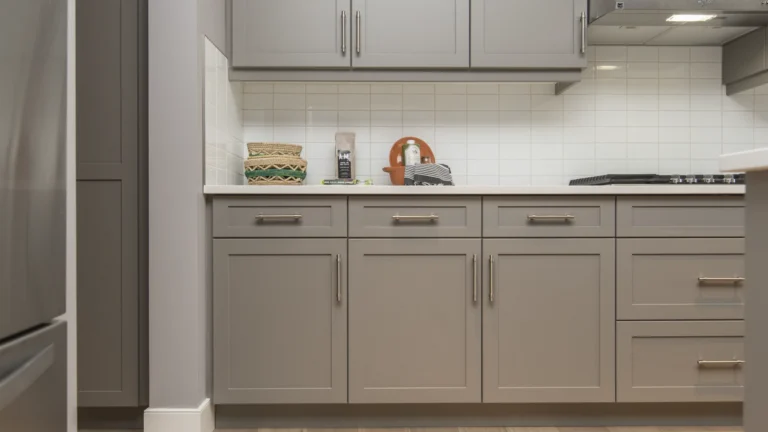
Warm whites, cream, beige, taupe, soft gray, and muted earth tones can work with a wide range of cabinetry.
This does not mean bold colors should be avoided. Green, blue, terracotta, and other saturated colors can create a distinctive kitchen when they are coordinated with the rest of the room. Current 2026 coverage shows a move toward warmer, more tactile, and personalized backsplash designs rather than relying exclusively on stark white tile.
Upgrade the Grout Instead of Replacing Every Tile
Grout can dramatically affect how old or new a backsplash looks.
Discolored grout can make clean tile appear dirty, while a new grout color can change the perceived pattern of the entire wall.
If the existing grout is structurally sound, cleaning and recoloring may be enough to refresh the surface.
Match Grout Color to the Desired Effect
Use a similar grout color when you want the tile to read as one continuous surface.
Choose contrasting grout when you want to emphasize individual tile shapes or installation patterns.
Remember that very light grout in a high-use cooking area may require more frequent cleaning to maintain its appearance.
Add Under-Cabinet Lighting to Improve the Backsplash
Lighting can transform a backsplash without replacing any tile.
Under-cabinet LEDs illuminate the surface directly and can highlight texture, color variation, or subtle tile patterns.
A backsplash that looks ordinary during the day may become a much stronger design feature when illuminated correctly.
Consider Color Temperature Carefully
Warm lighting can complement cream, beige, natural stone, and wood tones.
Neutral or cooler lighting may work better in kitchens with crisp whites, gray finishes, or a contemporary palette.
Whichever you choose, maintain consistency with the rest of the kitchen lighting so that the backsplash does not appear dramatically different from nearby surfaces.
Use Peel-and-Stick Backsplash for a Low-Commitment Update
Peel-and-stick products can be useful when you want to change the appearance without committing to traditional tile installation.
They can be particularly attractive for renters, temporary renovations, or homeowners testing a design before investing in permanent materials.
However, they should not automatically be treated as equivalent to a professionally installed tile backsplash.
Before using one near a cooktop or sink, verify the manufacturer’s instructions regarding heat, moisture, cleaning, substrate preparation, and installation location.
Current renovation coverage identifies peel-and-stick panels as one of the easier ways to visually cover dated backsplash surfaces, but suitability depends on the specific product and environment.
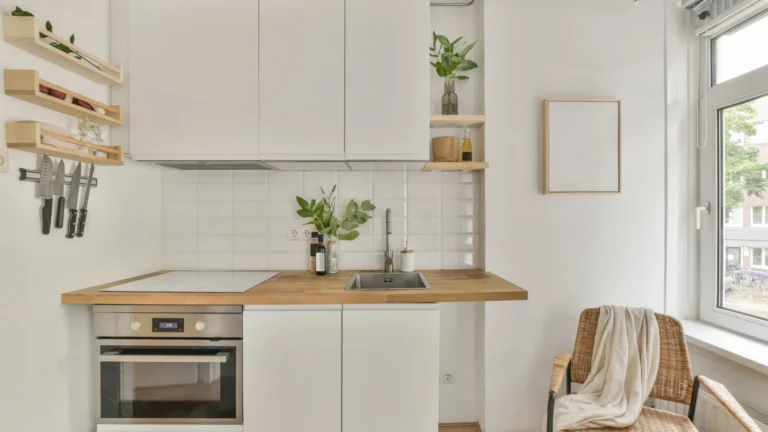
Make a Small Kitchen Feel Larger With the Right Backsplash
A backsplash can influence how spacious a kitchen feels.
Light-reflective surfaces, continuous patterns, restrained grout contrast, and carefully selected tile proportions can reduce visual fragmentation.
Small kitchens do not automatically require tiny tiles. In fact, a larger-format surface with fewer grout lines can sometimes create a cleaner visual field.
Try Glossy or Reflective Surfaces Carefully
Glossy ceramic, glass, and mirrored backsplash surfaces can reflect available light and create additional visual depth.
Mirrored backsplashes are receiving renewed attention in small kitchens because they can increase perceived brightness and depth.
However, reflective surfaces also show fingerprints, grease, and water spots more easily. Their maintenance requirements should be considered before installation.
Add Pattern Without Making the Kitchen Look Busy
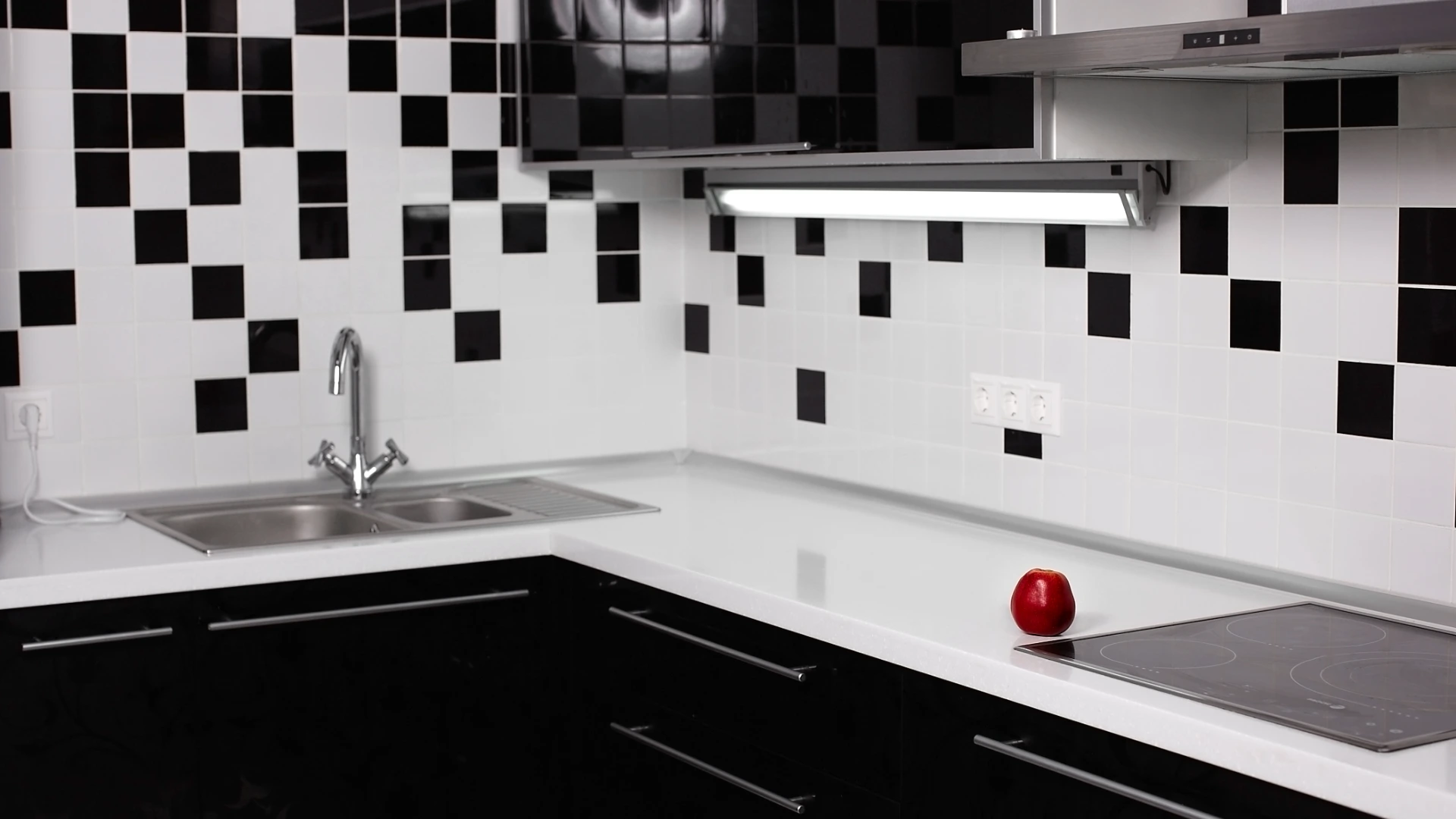
Patterned tile can become a focal point, but the pattern should have a relationship with the rest of the kitchen.
Geometric tiles, Moroccan-inspired patterns, encaustic-style designs, penny rounds, hexagons, and decorative motifs all offer different visual effects. Current backsplash guides continue to feature these patterns alongside classic subway tile and newer full-height installations.
If the cabinets and countertops are already visually strong, use pattern selectively.
A restrained patterned strip behind the range may have more impact than covering every wall with a high-contrast design.
Consider Metal for a Functional Statement Backsplash
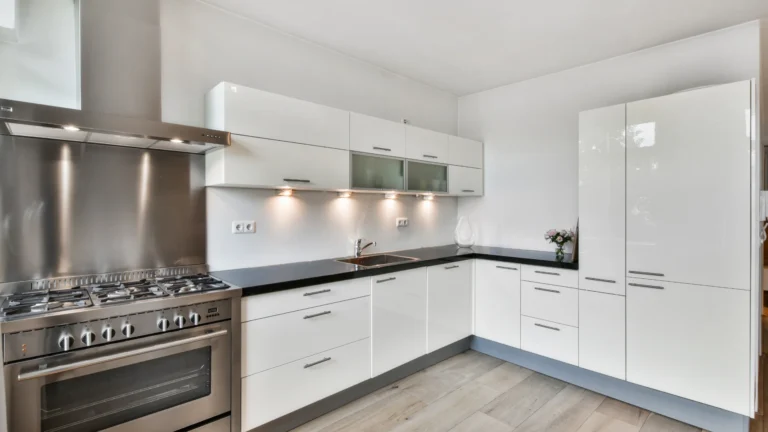
Stainless steel and other metal surfaces can provide a professional, contemporary appearance.
Metal is particularly appropriate around cooking areas where heat, grease, and frequent cleaning are concerns, provided the selected product is designed for the intended application.
It can also coordinate naturally with stainless appliances and commercial-style fixtures.
The downside is that some metal finishes show fingerprints, scratches, and water spots more readily than textured or matte surfaces.
Coordinate the Backsplash With Cabinets and Hardware
A successful backsplash does not need to match everything exactly.
Instead, it should establish a relationship with the cabinet color, countertop material, flooring, appliances, lighting, and hardware.
For example, warm brass hardware can work with warm neutral tile, while black hardware can provide contrast against lighter backsplash materials.
The goal is a coordinated palette rather than identical finishes everywhere.
Prioritize Easy Cleaning in High-Splash Areas
The most beautiful backsplash is not useful if it becomes difficult to maintain.
Think about where cooking splashes actually occur. The area directly behind a cooktop typically experiences more grease and heat than a wall farther from the cooking zone.
Likewise, the area behind a sink encounters repeated water exposure.
Choose materials and grout arrangements according to the conditions they will face.
Reduce Unnecessary Grout Joints
Fewer grout joints generally mean fewer lines that need cleaning.
This is one reason large-format tile and slab backsplashes can be attractive for homeowners who prioritize easy maintenance. The choice should still account for installation requirements, material cost, wall dimensions, and repair considerations.
Upgrade an Outdated Backsplash Without a Full Remodel
If demolition is not practical, there are several ways to change the appearance without rebuilding the entire kitchen.
You might:
- Deep-clean and reseal appropriate surfaces.
- Recolor or replace deteriorated grout.
- Refinish compatible tile surfaces.
- Add a suitable removable backsplash covering.
- Improve under-cabinet lighting.
- Replace decorative trim or edge treatments.
- Change nearby hardware and accessories to create a coordinated look.
The best solution depends on the condition of the existing installation.
Do not cover a backsplash that has active moisture damage or loose material without resolving the underlying problem first.
Plan the Installation Before Ordering Materials
Good backsplash design can still fail because of poor installation planning.
Measure the wall area carefully and account for outlets, switches, windows, cabinets, corners, and appliance locations.
Buy enough material to accommodate cuts and reasonable waste. The exact allowance depends on the tile format, pattern, room geometry, and installer.
Plan Outlet and Edge Details Early
Electrical outlets are among the most visible interruptions in a backsplash.
Their placement and cover plates should be considered as part of the design rather than treated as an afterthought.
Likewise, exposed tile edges need appropriate finishing. Depending on the material, this may involve trim, a finished tile edge, a stone profile, or another suitable transition.
These small details can make the difference between a professional-looking installation and one that appears unfinished.
Compare Popular Backsplash Upgrade Options
| Backsplash option | Best advantage | Main consideration |
| Ceramic tile | Affordable design flexibility | Grout requires maintenance |
| Porcelain tile | Durable and low water absorption | Cutting can require suitable tools |
| Glass tile | Reflects light and adds brightness | Shows installation imperfections |
| Natural stone | Unique, premium appearance | May require more maintenance |
| Slab backsplash | Minimal grout and strong visual impact | Higher material and installation cost |
| Peel-and-stick | Fast visual update | Product limitations vary |
| Stainless steel | Practical around cooking areas | Can show fingerprints and scratches |
Avoid Backsplash Trends That Fight the Kitchen
Trends can provide inspiration, but the backsplash should still make sense five or ten years from now.
Some designers are currently warning against overly personalized, loud mosaics, heavy dark slabs in already-small kitchens, and highly reflective novelty finishes when long-term resale appeal matters.
This does not mean those designs are universally bad. It means the design should be evaluated in context.
If you love a bold pattern, use it intentionally rather than assuming the newest trend automatically creates a better kitchen.
Frequently Asked Questions
What is the easiest way to upgrade a kitchen backsplash?
The easiest option depends on its condition. Cleaning and refreshing grout can improve a sound backsplash, while peel-and-stick products, compatible refinishing systems, or new tile can provide larger visual changes.
What backsplash material is easiest to maintain?
Large-format surfaces and materials with fewer grout joints can be easier to clean. Ceramic and porcelain are also popular because they offer many durable, relatively low-maintenance options when properly installed.
Is a full-height backsplash worth it?
A full-height backsplash can create a more integrated and architectural appearance while reducing visual interruptions. It is particularly effective behind ranges, open shelving, or on prominent kitchen walls.
What backsplash works best with white cabinets?
White cabinets can work with almost any backsplash palette. Warm neutral tile creates a softer look, while dark, patterned, or colored tile can provide stronger contrast.
Is subway tile still a good backsplash choice?
Yes. Subway tile remains versatile because its simple geometry works with traditional, transitional, and contemporary kitchens. Changing its size, orientation, color, or grout can create a less conventional appearance.
Can I upgrade my backsplash without removing the old tile?
Sometimes. Depending on the condition of the existing surface, options may include deep cleaning, grout renewal, compatible refinishing products, or removable coverings. Always address loose tiles, moisture damage, or an unstable substrate first.
Should backsplash grout match the tile?
Not necessarily. Matching grout creates a quieter, more continuous appearance, while contrasting grout emphasizes the tile pattern. The best choice depends on the desired visual effect and cleaning requirements.
Conclusion
The most effective kitchen backsplash upgrade ideas balance design, durability, maintenance, and the existing architecture of the kitchen. A backsplash can be a subtle background, a strong focal point, or a practical surface designed primarily for easy cleaning.
Start by deciding whether your existing backsplash needs a refresh or complete replacement. Then choose the material, color, pattern, grout, height, and lighting based on how the kitchen is actually used. Full-height slabs, warm handmade-look tiles, updated subway layouts, herringbone patterns, reflective surfaces, and carefully selected colors all have their place, but none is automatically the right answer for every home.
A successful backsplash upgrade is ultimately one that looks intentional, performs well in a working kitchen, and still feels appropriate after the latest design trend has passed.