Kitchen Cabinet Upgrade Ideas: 15 Smart Ways to Refresh Your Kitchen
The right kitchen cabinet upgrade ideas can transform an outdated kitchen without requiring a complete renovation. Because cabinets occupy a large portion of the room’s visual and functional space, even relatively small changes can improve appearance, storage, accessibility, and everyday workflow.
Before replacing everything, inspect what you already have. If the cabinet boxes are structurally sound and the existing layout works, painting, refacing, new hardware, interior organizers, lighting, or upgraded doors may deliver much of the improvement you want for considerably less disruption.
The most effective approach is to separate appearance problems from structural and functional problems. A worn finish can often be refinished, while damaged cabinet boxes or a fundamentally poor layout may justify a larger renovation.
Assess Your Cabinets Before Choosing an Upgrade
Not every cabinet needs the same solution. Start by examining the condition of the doors, frames, boxes, hinges, drawer slides, and interior shelves.
Look for water damage around the sink, swelling of particleboard, loose joints, sagging shelves, deteriorated finishes, and drawers that no longer operate properly.
If the cabinet boxes are solid but the fronts look dated, you have considerably more upgrade options than if the entire cabinet structure is failing.
When Existing Cabinets Are Worth Keeping
Keeping your current cabinets usually makes sense when:
- The layout works for your cooking habits.
- Cabinet boxes are square and structurally sound.
- There is no significant moisture or water damage.
- Storage capacity is generally adequate.
- You mainly dislike the color, doors, hardware, or organization.
In this situation, a targeted cabinet makeover can change the kitchen without the demolition associated with a full replacement.
When an Upgrade Is Not Enough
Cosmetic improvements cannot solve every problem.
Consider replacement when cabinet boxes are severely damaged, the layout creates major workflow problems, storage is fundamentally inadequate, or the kitchen needs substantial plumbing and electrical changes.
The important question is not simply, “How old are my cabinets?” It is what actually needs to change?
Paint the Cabinets for a Major Visual Change
Painting remains one of the most cost-effective kitchen cabinet upgrade ideas when the existing doors and frames are suitable for refinishing.
A successful cabinet painting project requires considerably more preparation than simply applying a new coat of paint. Grease, dust, old finishes, and residue must be removed before sanding, priming, and painting.
Prepare the Surface Properly
Remove doors, label each piece, clean the surfaces thoroughly, and lightly sand where appropriate. The exact preparation depends on whether the cabinets are solid wood, veneer, laminate, or another material.
Use a primer compatible with the existing surface and the intended topcoat. Allow sufficient drying and curing time before reinstalling doors and hardware.
Poor preparation is one of the main reasons a cabinet finish begins peeling or showing imperfections prematurely.
Choose Cabinet Colors Based on the Whole Room
White is not the only option.
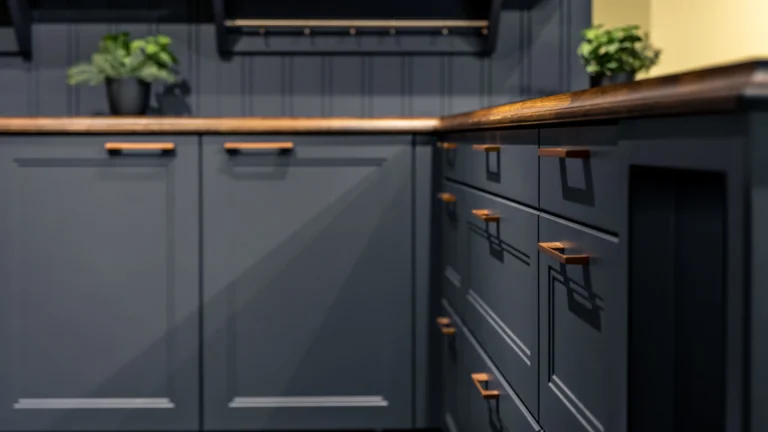
Warm white, greige, muted green, soft blue, natural wood, and darker accent colors can all work depending on the flooring, countertop, backsplash, natural light, and overall kitchen style.
Test samples in the actual room before committing. A color that looks attractive under a showroom’s lighting can appear very different beside your countertop and flooring.
Replace Cabinet Hardware for an Immediate Upgrade
One of the simplest kitchen cabinet upgrade ideas is replacing knobs and pulls.
Hardware affects both appearance and usability. A dated handle can make otherwise attractive cabinets look old, while coordinated hardware can give basic cabinetry a more finished appearance.
Before purchasing new pieces, measure the distance between existing screw holes if you want to reuse them. Choosing replacement pulls with a different hole spacing may require filling old holes and drilling new ones.
Match Hardware to Cabinet Style
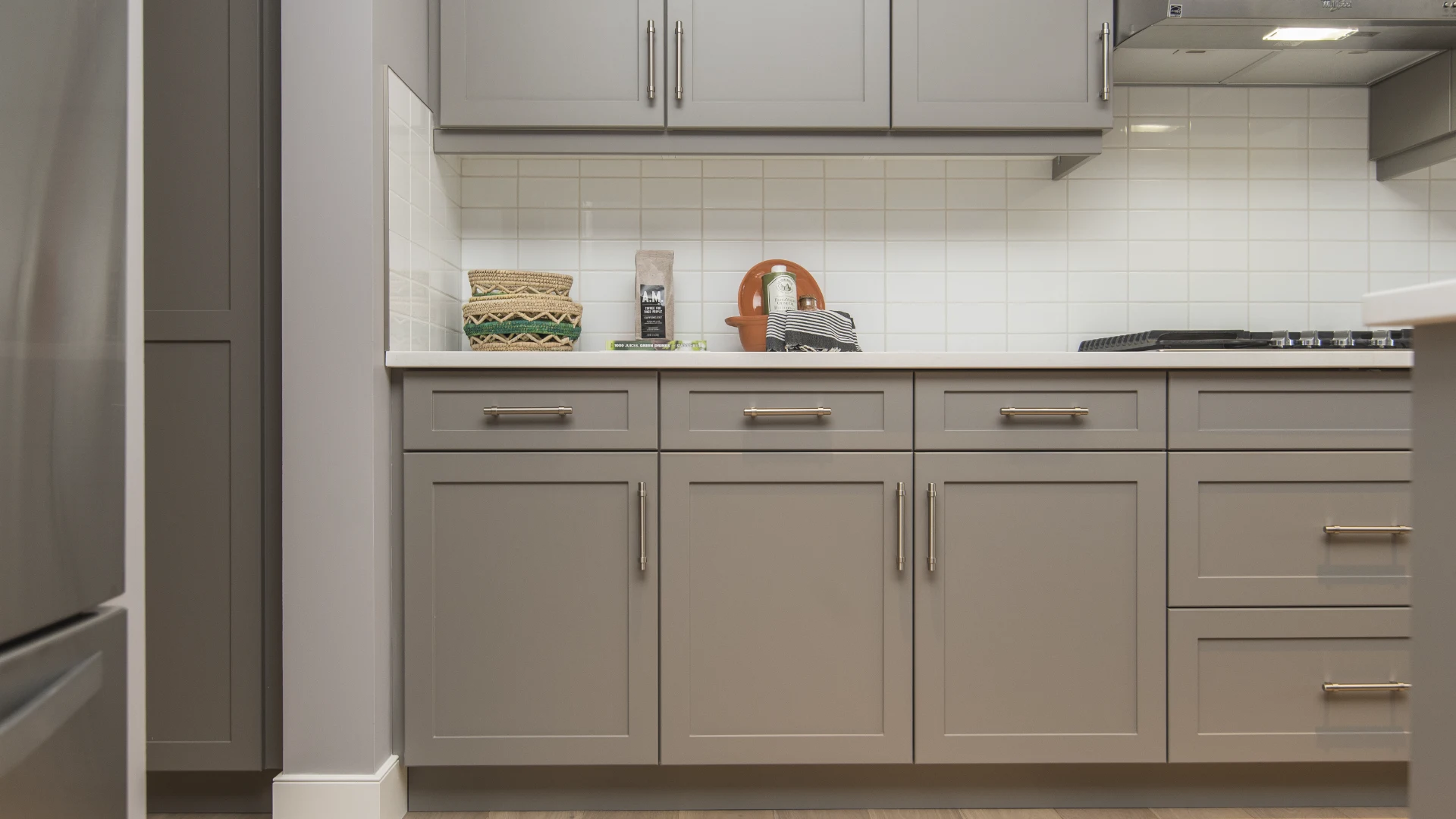
Long, simple pulls generally complement contemporary cabinetry, while knobs and shorter pulls can work well in traditional kitchens.
You do not necessarily need every metal in the room to match perfectly, but repeating a finish in several places creates visual consistency.
Think about the faucet, lighting fixtures, appliances, and cabinet hardware as parts of the same composition.
Upgrade Cabinet Doors Instead of Replacing the Boxes
If the cabinet boxes remain functional but the doors look outdated, replacing the fronts can create a substantial visual transformation.
This approach can be particularly useful when you want to change from raised-panel doors to Shaker-style fronts or introduce glass-front doors without rebuilding the entire cabinet system.
Consider Glass-Front Cabinet Doors
Glass doors can break up a long run of solid cabinetry and make selected areas feel more open.
However, they work best when the contents behind them are organized. If shelves are packed with mismatched containers and rarely used items, glass can actually make the kitchen look more cluttered.
Use glass strategically for dishes, glassware, cookbooks, or other items worth displaying.
Reface Cabinets When the Structure Is Good but the Look Is Outdated
Cabinet refacing occupies the middle ground between painting and full replacement.
During refacing, the existing cabinet boxes generally remain while the visible surfaces are updated with new doors, drawer fronts, and matching exterior material.
This can provide a more substantial visual change than painting while avoiding the complete removal and replacement of the cabinet system.
Refacing vs. Repainting vs. Replacement
| Option | Best for | Main advantage | Main limitation |
| Repainting | Sound cabinets with dated finishes | Lower-cost visual refresh | Does not change door style or layout |
| Refacing | Good cabinet boxes with outdated fronts | New appearance without full tear-out | Limited layout changes |
| Replacement | Damaged or poorly planned kitchens | Maximum design flexibility | Highest cost and disruption |
The right choice depends on what is wrong with your current kitchen rather than simply choosing the cheapest option.
Add Pull-Out Storage to Deep Cabinets
Some of the most useful kitchen cabinet upgrade ideas happen inside the cabinets rather than on their exterior.
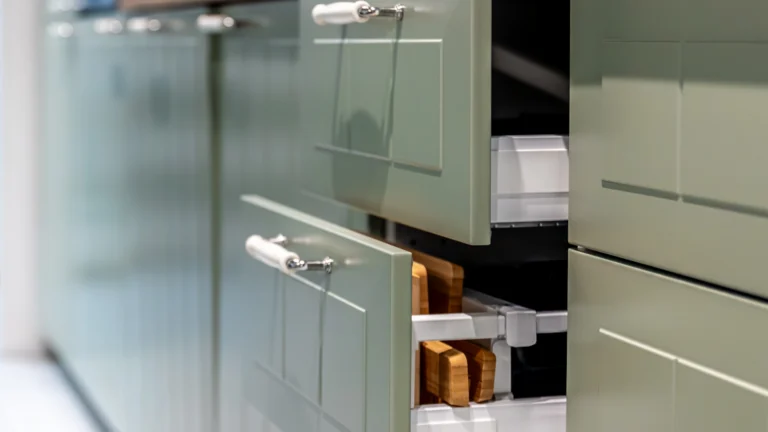
Deep lower cabinets can become difficult to use because objects at the back are hidden behind items in front. Pull-out shelves allow the entire storage surface to move toward you.
This can be especially useful for:
- Pots and pans
- Small appliances
- Food containers
- Cleaning supplies
- Baking equipment
- Heavy cookware
Before installing a pull-out mechanism, check the cabinet’s internal width, depth, height, and weight capacity.
Convert Lower Cabinets to Deep Drawers
Traditional lower cabinets require you to bend down and reach toward the back. Deep drawers can make heavy cookware and frequently used kitchen equipment significantly easier to access.
Drawer bases work particularly well for pots, pans, plates, mixing bowls, and other items that benefit from horizontal organization.
Organize Drawers by Function
Avoid creating a drawer simply because you have an empty cabinet opening.
Instead, assign storage based on how you work.
For example, cooking utensils can stay near the primary preparation area, while pots and pans can be located near the cooktop. Plates may be more convenient near the dishwasher or dining area.
This creates a storage system based on workflow rather than cabinet size alone.
Install a Dedicated Pull-Out Pantry
A narrow cabinet can sometimes become one of the most useful storage areas in the kitchen when equipped with appropriate pull-out shelves or pantry hardware.
Instead of losing small items at the back of a deep cupboard, a pull-out system brings the contents forward.
Store dry foods, spices, bottles, and other appropriate items according to the dimensions and load capacity of the system.
Be careful not to overload narrow pull-outs. The hardware must be rated for the intended weight.
Add a Pull-Out Trash and Recycling Cabinet
Trash containers take up valuable floor space and can make an otherwise organized kitchen look cluttered.
A pull-out cabinet keeps the containers concealed while placing them close to the food preparation and cleanup zones.
If you are planning this upgrade, account for the bin dimensions, door clearance, plumbing beneath the sink, and available cabinet width.
The best location is usually determined by workflow rather than aesthetics alone.
Install an Appliance Garage to Clear Countertops
Countertop appliances can quickly dominate a kitchen. An appliance garage provides dedicated cabinet storage for items such as coffee makers, blenders, toasters, or food processors.
Modern appliance-garage planning should account for power access, appliance dimensions, door clearance, ventilation, and cleaning rather than treating the space as an ordinary cabinet.
Plan Electrical Access Before Installation
If an appliance will operate inside the storage area, the electrical arrangement needs to be planned safely and appropriately.
Do not simply run extension cords through cabinet openings as a permanent solution. Where new electrical work is required, use a qualified electrician and follow applicable local requirements.
Add Under-Cabinet Lighting
Cabinet upgrades are not limited to storage and appearance. Lighting can make the kitchen substantially easier to use.
Under-cabinet lighting directs illumination onto the countertop, reducing shadows created by upper cabinets.
LED fixtures are popular because they can provide efficient, low-profile task lighting without consuming valuable counter space.
Use Lighting for Both Function and Atmosphere
Consider separate layers:
- General ceiling lighting for overall illumination
- Under-cabinet lighting for countertop tasks
- Decorative or accent lighting where appropriate
Dimmable fixtures can provide flexibility between bright meal preparation and softer evening lighting.
Add Crown Molding or Cabinet Trim
Crown molding can make standard cabinetry appear more integrated with the architecture of the room.
It is especially useful when there is an awkward gap between the cabinet tops and ceiling. However, molding should be selected according to ceiling height and cabinet proportions.
Oversized trim can make a compact kitchen feel heavy.
Fill Cabinet Gaps Carefully
If your cabinets stop below the ceiling, you have several options: leave the gap intentionally, add trim, extend cabinetry, or use the area for controlled decorative storage.
Avoid automatically filling every open space with objects. Clutter above cabinets can make the kitchen appear less organized.
Introduce Open Shelving Selectively
Removing one or two cabinet doors can create an open-shelf effect without rebuilding the kitchen.
Open storage works best when used for items that are attractive, frequently used, or easy to keep organized.
However, it is not necessarily a storage upgrade for everyone. Open shelves collect visible dust and require more attention than closed cabinets.
Use them as an intentional design element rather than removing every cabinet door.
Add Cabinet Interior Organizers
Simple inserts can improve the usable capacity of existing cabinets.
Consider adjustable dividers for baking sheets, vertical slots for cutting boards, tiered shelf risers for cans, or drawer inserts for utensils.
These additions are inexpensive compared with replacing cabinetry and can solve very specific storage problems.
Organize by Frequency of Use
Keep everyday items in the easiest-to-reach locations.
Occasionally used serving pieces, seasonal cookware, and specialty appliances can occupy higher or less accessible storage.
This reduces unnecessary movement and makes the kitchen easier to maintain.
Upgrade Hinges and Drawer Slides
Old hardware can make otherwise good cabinets feel poor quality.
Soft-close hinges can reduce slamming and improve door movement, while better drawer slides can improve stability and access.
Before purchasing replacement hardware, confirm the existing hinge type, overlay, mounting configuration, drawer dimensions, and load requirements.
Not every replacement component is universally compatible.
Create a More Efficient Spice and Utensil Zone
Small storage upgrades can have a surprisingly large effect on everyday cooking.
A narrow pull-out spice cabinet near the cooking zone can keep frequently used seasonings accessible without occupying the countertop.
Similarly, drawer dividers can prevent cooking utensils from becoming mixed together.
The principle is simple: store items close to the point where they are used.
This approach is more useful than organizing every cabinet according to appearance alone.
Upgrade Cabinets Without Making the Kitchen Look Overdesigned
One mistake with cabinet renovations is trying to introduce too many design ideas at once.
A kitchen may contain new cabinet colors, multiple hardware finishes, patterned glass, decorative molding, open shelves, a dramatic backsplash, and several lighting styles—but the result can feel visually chaotic.
Choose a clear design direction.
For example, painted Shaker cabinets, simple hardware, a restrained backsplash, and warm lighting can create a cohesive result without relying on numerous decorative features.
Choose the Right Cabinet Upgrade for Your Budget
Your budget should determine the scale of the project, but it should not determine whether the result is functional.
For a smaller budget, prioritize hardware, paint, drawer organizers, lighting, and interior storage accessories.
For a moderate project, consider replacement doors, refacing, pull-outs, improved drawer systems, or selected cabinet additions.
For a major renovation, evaluate whether changing the entire cabinet layout would solve problems that cosmetic upgrades cannot.
The goal is to spend money on the problems you actually have.
Plan Your Cabinet Upgrade in the Right Order
A practical cabinet renovation can be organized into a sequence that reduces unnecessary work.
Step 1: Diagnose the Existing Kitchen
Document damaged areas, poor storage, difficult-to-access cabinets, outdated finishes, and workflow problems.
Step 2: Separate Cosmetic and Functional Problems
Determine whether each problem requires paint, hardware, organization, new doors, refacing, or structural replacement.
Step 3: Measure Before Ordering
Measure cabinet openings, doors, drawer fronts, hardware spacing, interior dimensions, and appliance clearances.
Step 4: Complete Interior Work Before Final Finishing
If you are adding pull-outs, lighting, or organizers, plan those changes before completing cosmetic finishing work that could later be damaged.
Step 5: Finish With Hardware and Styling
Install handles, knobs, trim, and decorative elements after the major cabinet work is complete.
Frequently Asked Questions
What is the easiest way to upgrade kitchen cabinets?
Painting the cabinets and replacing the hardware are among the simplest visible changes. Interior organizers and under-cabinet lighting can then improve functionality without major construction.
Is it cheaper to reface or replace kitchen cabinets?
Refacing is generally less disruptive than full replacement because the existing cabinet boxes remain. However, the best choice depends on cabinet condition, desired changes, layout, materials, and project scope.
Can I upgrade kitchen cabinets without replacing them?
Yes. Existing cabinets can often be improved with paint, new hardware, organizers, pull-out shelves, drawer systems, lighting, trim, or replacement doors when the underlying structure is sound.
Are pull-out cabinet shelves worth it?
They can be particularly useful in deep lower cabinets because they make items at the back easier to reach. Choose hardware with an appropriate load rating and verify the cabinet dimensions before installation.
Should I replace cabinet doors or paint them?
Replace doors when you want a different door profile or the existing fronts are damaged. Painting can be sufficient when the doors are structurally sound and you mainly want a new color or finish.
How can I make old cabinets look more modern?
A coordinated combination of cabinet color, contemporary hardware, improved lighting, cleaner door profiles, and better organization can modernize older cabinetry without replacing every component.
Conclusion
The best kitchen cabinet upgrade ideas focus on both what you see and how the cabinets work. Painting, new hardware, replacement doors, refacing, lighting, pull-out shelves, drawer organizers, appliance storage, and improved cabinet accessories can all produce meaningful improvements when selected for the right situation.
Before starting, determine whether your kitchen has a cosmetic problem, storage problem, accessibility problem, or structural problem. That diagnosis will help you avoid spending money on upgrades that cannot solve the underlying issue. When the existing cabinet boxes and layout are still useful, targeted improvements can deliver a refreshed, organized, and more functional kitchen without the disruption of a complete cabinet replacement.