Bathroom Vanity Upgrade Ideas for a Stylish, Functional Space
The best bathroom vanity upgrade ideas can refresh an outdated bathroom without requiring a complete renovation. Because the vanity combines storage, countertop space, plumbing, lighting, and visual style in one area, improving it can have a noticeable effect on both appearance and everyday functionality.
An effective vanity upgrade does not necessarily mean replacing the entire unit. Depending on its condition, you may be able to repaint the cabinet, replace the hardware, install a new countertop, upgrade the sink and faucet, improve the drawers, or add a better mirror and lighting arrangement.
Before choosing finishes, evaluate the vanity’s size, construction, storage capacity, plumbing configuration, and relationship with the rest of the bathroom. The goal is to create a vanity that fits the room and supports the way it is actually used.
Evaluate the Existing Vanity Before Replacing It
Start by determining whether the existing vanity is structurally worth keeping. Look for swollen cabinet panels, water damage, loose doors, damaged drawer boxes, deteriorated finishes, and problems around the sink.
Check the Cabinet Structure
A vanity with solid construction and minor cosmetic damage may be a good candidate for an upgrade. If the cabinet is warped, repeatedly exposed to water, or structurally compromised, spending money on new finishes may not be worthwhile.
Examine the Plumbing Area
Look beneath the sink before deciding on a new storage configuration. Identify the drain, supply lines, shutoff valves, and any other plumbing components. A new vanity needs to accommodate these connections without making future maintenance unnecessarily difficult.
Refresh the Vanity With New Cabinet Paint
Painting is one of the simplest bathroom vanity upgrade ideas when the cabinet structure is still sound. A new color can completely change the character of the bathroom without replacing the entire vanity.
Choose a Finish Suitable for Bathroom Conditions
Bathroom cabinetry experiences humidity and occasional splashes. Use a coating system appropriate for the cabinet material and prepare the surface correctly before painting. Cleaning, sanding, priming where necessary, and allowing adequate curing time can be just as important as the final paint color.
Choose Color According to the Bathroom
White and soft neutrals can create a clean appearance. Deep green, navy, charcoal, muted blue, and warm wood tones can create more contrast. The vanity does not need to match the wall exactly. Instead, coordinate it with the flooring, countertop, fixtures, and other major finishes.
Replace the Vanity Hardware
Cabinet pulls and knobs are small components, but they have a strong visual effect. Replacing dated hardware can make an older vanity feel considerably newer.
Match Hardware to the Overall Design
Common finishes include:
- Brushed or satin metal
- Polished metal
- Matte black
- Brass tones
- Bronze finishes
Choose hardware according to the bathroom’s existing fixtures. You can coordinate the cabinet pulls with the faucet, shower hardware, towel bars, or lighting without requiring every metal surface to be identical.
Check Existing Hole Spacing
If the vanity already has handles, measure the distance between mounting holes before buying replacements. Using the existing holes can make the upgrade easier and avoid unnecessary cabinet modifications.
Replace the Vanity Countertop
A new countertop can transform the vanity while preserving the existing cabinet. Popular options include quartz, natural stone, solid-surface materials, porcelain, and other bathroom-suitable surfaces.
Consider Maintenance Before Appearance
The countertop should be selected according to how the bathroom is used. A busy family bathroom may benefit from a durable, easy-to-maintain surface, while a guest bathroom may allow greater emphasis on decorative detail. Also consider the location of seams, backsplash requirements, sink type, and faucet configuration.
Choose a Countertop That Fits the Vanity
Do not select the countertop in isolation. Measure the finished vanity width and account for side clearances, wall irregularities, sink dimensions, faucet holes, and backsplash requirements. A custom countertop may be appropriate when the bathroom walls are not perfectly square or the vanity has an unusual configuration.
Upgrade the Bathroom Sink
The sink is another major part of the vanity’s appearance and function. A new basin can modernize the vanity without replacing the cabinet itself.
Consider an Undermount Sink
An undermount sink creates a clean transition between the countertop and basin. The countertop can be wiped directly toward the sink without an exposed rim getting in the way. This style is particularly compatible with solid-surface and stone countertops.
Use a Vessel Sink for a Statement Look
A vessel sink sits above the countertop and can become a prominent design element. It can work well in certain contemporary or decorative bathrooms. However, its added height affects the final countertop-to-rim height, so the vanity and sink should be designed as one system.
Consider an Integrated Sink and Countertop
Some solid-surface products combine the basin and countertop into one continuous piece. This minimizes visible seams and can simplify cleaning.
Install a New Bathroom Faucet
A faucet replacement can provide a noticeable visual update without changing the entire vanity.
Match the Faucet to the Sink Configuration
Check the number and spacing of the existing faucet holes. Common configurations include single-hole, centerset, and widespread installations. Changing from one configuration to another may require a new countertop or modification, depending on the existing installation.
Consider Water Efficiency
A modern faucet can provide the opportunity to improve water efficiency. Look for products with appropriate flow specifications and certifications for your market. The most attractive faucet is not necessarily the best choice if it creates excessive splashing or does not work well with the sink.
Upgrade the Vanity Drawers
A vanity can have plenty of storage but still be difficult to use. Poorly configured drawers often leave products buried in the back.
Use Full-Extension Drawers
Full-extension slides allow more of the drawer to become accessible. This can make deeper vanity storage considerably easier to organize.
Add Internal Dividers
Separate sections for cosmetics, grooming supplies, dental products, and other small items can prevent the drawer from becoming a mixed collection of products. Adjustable dividers are especially useful because storage needs change over time.
Add a Pull-Out Organizer
A narrow pull-out can make use of otherwise awkward cabinet space. It can hold toiletries, cleaning products, towels, or other narrow items.
Do Not Block Plumbing
Under-sink pull-outs must be designed around the drain and supply lines. Leave adequate access to shutoff valves and plumbing connections. A storage improvement should not turn a simple plumbing repair into a cabinet demolition project.
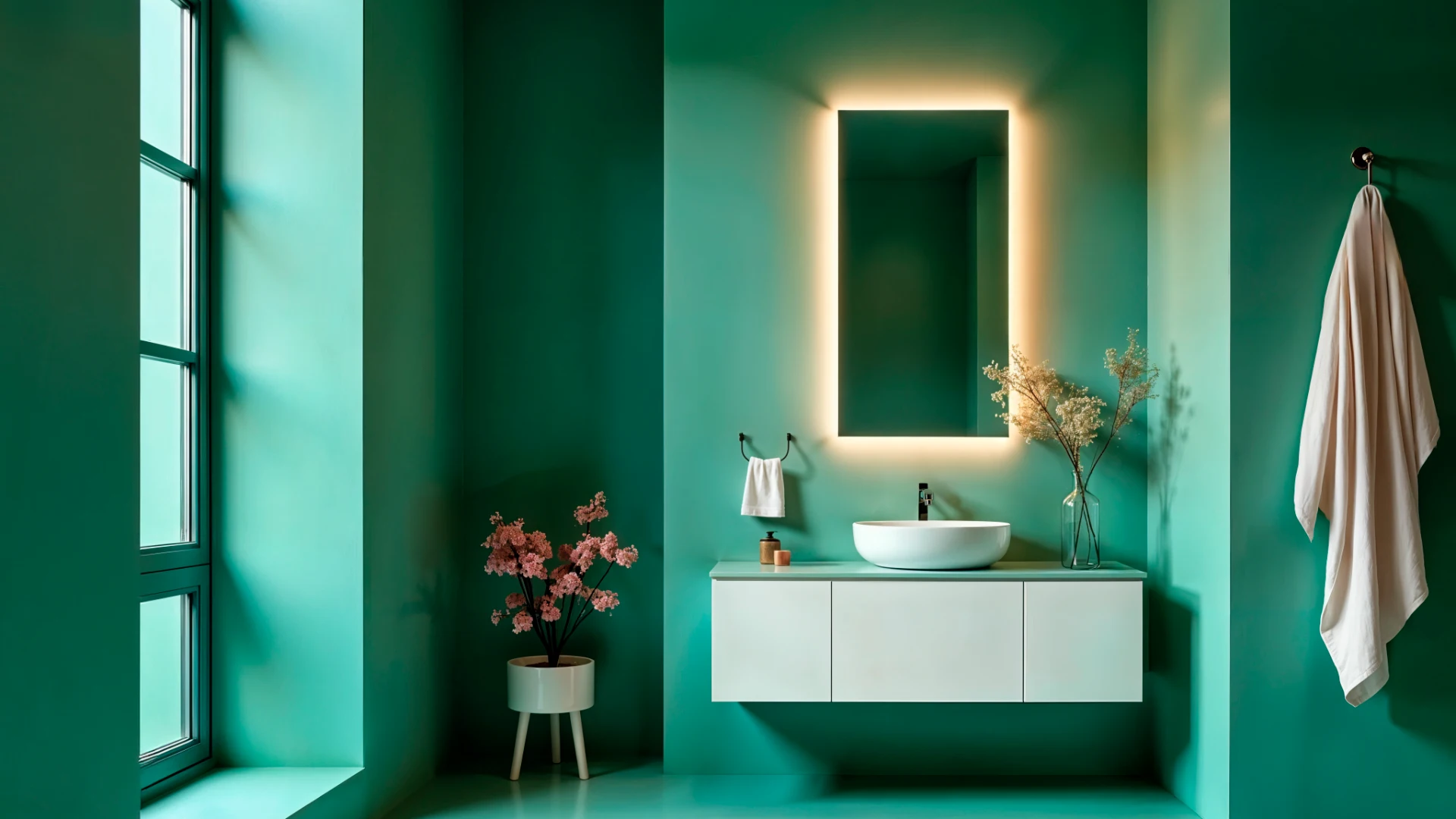
Consider a Floating Bathroom Vanity
Floating vanities are among the most recognizable bathroom vanity upgrade ideas for contemporary bathrooms. They attach to the wall rather than sitting directly on the floor.
Create a More Open Floor Appearance
Visible flooring underneath the cabinet can make the room feel lighter. The effect can be particularly useful in smaller bathrooms.
Check Wall Support Before Installation
A floating vanity and its contents place significant load on the wall. The mounting system and wall structure must be capable of supporting that weight. This is especially important when replacing a floor-mounted vanity with a wall-mounted model.
Choose a Vanity Size That Fits the Bathroom
A larger vanity is not automatically better. The correct size depends on the room’s width, door location, toilet position, shower entry, and required circulation.
Measure Depth as Carefully as Width
A vanity can fit between two walls and still project too far into the room. Depth affects how comfortably people can walk past it and how the bathroom door operates.
Consider a Narrow Vanity for Tight Spaces
A shallower vanity can preserve floor space while still providing a basin and basic storage. If storage capacity is limited, compensate with a medicine cabinet, recessed shelving, or another appropriately located storage solution.
Upgrade the Vanity Mirror at the Same Time
The mirror sits directly above the vanity, so replacing one without considering the other can produce an unbalanced result.
Use a Wider Mirror
A mirror extending across much of the vanity can create a stronger visual connection between the two elements. It can also provide more usable reflection space.
Consider a Medicine Cabinet
A mirrored medicine cabinet adds concealed storage while maintaining the appearance of a mirror. This is particularly useful when the vanity itself has limited cabinet capacity.
Improve Vanity Lighting
Good vanity lighting is essential for grooming tasks. A ceiling light positioned behind the user can create facial shadows even when the bathroom appears bright.
Add Lighting Beside the Mirror
Wall-mounted fixtures positioned around the face can provide more even illumination. The exact placement depends on the fixture design and mirror dimensions.
Use a Backlit Mirror Carefully
An illuminated mirror can provide a modern appearance and soft surrounding light. However, decorative backlighting may not replace dedicated task lighting if detailed grooming requires stronger, more evenly distributed illumination.
Add a Backsplash Behind the Vanity
A backsplash protects the wall from water and creates an opportunity to connect the countertop with the rest of the bathroom.
Use a Simple Countertop-Matched Backsplash
A backsplash made from the same material as the countertop creates a continuous appearance.
Use Tile for More Character
Tile can introduce color, texture, or pattern. Keep the scale of the tile appropriate for the vanity and surrounding wall so the area does not become visually overwhelming.
Use Wall-Mounted Faucets for a Custom Look
A wall-mounted faucet can create a clean countertop appearance by moving the faucet body away from the basin deck. It can also make wiping the countertop easier.
Plan the Plumbing Before Finishing the Wall
Unlike a straightforward faucet replacement, a wall-mounted faucet usually requires plumbing inside the wall. The rough-in height, valve depth, spout projection, and sink position need to be coordinated before the wall is finished.
Add a Built-In Outlet for Grooming Devices
A vanity area often becomes the primary location for hair dryers, electric toothbrushes, shavers, and other devices. An appropriately located electrical outlet can make the area considerably more convenient.
Follow Bathroom Electrical Requirements
Bathroom outlets and electrical installations are subject to safety requirements that vary by jurisdiction. If new wiring or outlet locations are needed, use a qualified electrician and ensure the installation complies with applicable local requirements.
Use Soft-Close Doors and Drawers
Soft-close hardware can improve the everyday experience of an upgraded vanity. Doors and drawers close more quietly and with less impact.
Replace Hardware Instead of the Entire Cabinet
If the cabinet box is structurally sound, upgrading the hinges and drawer slides may provide a substantial improvement without replacing the complete vanity. Check that the replacement hardware is compatible with the existing cabinet construction.
Create a More Accessible Vanity
A vanity should work for everyone who uses the bathroom. For households with mobility considerations, the standard cabinet configuration may need modification.
Consider Open Space Beneath a Floating Vanity
An appropriately designed floating vanity can provide knee clearance for some users. However, the exact dimensions depend on the intended use and accessibility requirements.
Choose Easy-to-Operate Hardware
Large pulls and smoothly operating drawers can be easier to use than small knobs. Accessibility requirements should be planned according to the user’s needs and applicable standards rather than relying on a generic vanity dimension.
Use a Double Vanity When the Room Allows It
A double vanity can improve functionality in a shared bathroom by providing separate sink areas. However, it requires substantially more wall and countertop space than a single vanity.
Do Not Force a Double Vanity Into a Small Room
Two sinks are useful only if the room still provides comfortable circulation. A well-designed single vanity can be more practical than a cramped double arrangement.
Add a Makeup or Grooming Station
If the bathroom has sufficient space, a dedicated grooming area can separate cosmetics and personal-care activities from the main sink.
Integrate the Station With the Vanity
A continuous countertop can create a unified appearance. Drawers beneath the station can store makeup, brushes, or grooming equipment. The countertop height should be selected according to how the space will actually be used.
Use a Furniture-Style Vanity for Character
A furniture-style vanity can give a bathroom a less built-in and more residential appearance. It can be especially effective in traditional, transitional, or vintage-inspired designs.
Protect the Vanity From Water
Furniture-style construction must still be appropriate for bathroom humidity and occasional splashes. Keep exposed wood and other vulnerable materials properly finished and away from direct water exposure.
Choose Vanity Materials for Durability
The bathroom environment demands more from cabinetry than a dry room.
Consider Moisture Exposure
Look for construction and finishes designed to tolerate humidity. Pay particular attention to cabinet edges, sink cutouts, joints, and areas near plumbing.
Consider Cleaning Requirements
A vanity with intricate decorative details may require more maintenance. Smooth surfaces and appropriately sealed materials can make regular cleaning easier.
Coordinate the Vanity With the Bathroom’s Design
A new vanity should look like part of the bathroom rather than an isolated piece of furniture. Consider the relationship between:
- Vanity finish
- Countertop
- Sink
- Faucet
- Mirror
- Lighting
- Flooring
- Wall color
- Shower or tub finishes
- Cabinet hardware
Create Contrast Intentionally
A light countertop can work well against a darker vanity. A wood vanity can add warmth to a bathroom with stone or porcelain surfaces. Contrast works best when one or two elements provide the visual emphasis while the rest support them.
Choose Between Vanity Refacing and Replacement
Not every vanity needs to be removed. Refacing, repainting, hardware replacement, and countertop upgrades can provide a new appearance while preserving the existing cabinet.
Refacing Works Best When the Cabinet Is Sound
If the doors and drawer fronts are outdated but the cabinet box remains structurally strong, replacing the visible fronts can create a significant transformation.
Replace the Vanity When Function Is the Problem
Replacement is usually more appropriate when the cabinet has:
- Significant water damage
- Poor internal storage
- Structural problems
- Incorrect dimensions
- Insufficient countertop space
- A layout that does not work
Do not spend heavily on cosmetic improvements when the underlying cabinet no longer meets your needs.
Compare Bathroom Vanity Upgrade Options
| Upgrade | Best for | Main benefit | Difficulty |
| Paint | Sound cabinets | New appearance | Low to medium |
| New hardware | Dated style | Fast visual update | Low |
| New countertop | Worn surface | Major visual improvement | Medium |
| New sink | Outdated basin | Better appearance/function | Medium |
| New faucet | Old fixture | Modernizes vanity | Low to medium |
| Drawer organizers | Poor organization | Better storage | Low |
| New drawer slides | Difficult drawers | Improved operation | Medium |
| Floating vanity | Contemporary remodel | Open floor appearance | Medium to high |
| Medicine cabinet | Limited storage | Mirror + storage | Medium |
| Vanity lighting | Poor illumination | Better grooming light | Medium |
| New vanity | Structural problems | Complete functional upgrade | High |
Upgrade a Bathroom Vanity on a Limited Budget
You do not need to replace every component. Prioritize the elements that have the greatest impact.
Low-Cost Improvements
Start with cabinet hardware, paint, drawer organizers, improved lighting, or a new mirror. These changes can refresh the vanity without major construction.
Medium-Cost Improvements
Consider a new faucet, countertop, sink, cabinet fronts, or upgraded drawer hardware. These provide a more substantial transformation while potentially preserving the existing cabinet.
Higher-Cost Improvements
A complete vanity replacement, plumbing relocation, wall-mounted faucet, custom cabinetry, or new electrical work can increase both labor and material costs. If the budget is limited, prioritize structural quality, plumbing, and the countertop or cabinet components that receive the most daily use.
Avoid Common Bathroom Vanity Upgrade Mistakes
Even a relatively simple vanity project can create problems when measurements and plumbing are overlooked.
Do Not Choose the Vanity Before Measuring
Measure width, depth, height, wall conditions, door swings, and nearby fixtures.
Do Not Ignore Drawer Clearance
A drawer that opens directly into the toilet or another fixture is not functional storage.
Do Not Block Plumbing Access
Keep shutoff valves and essential connections accessible.
Do Not Choose a Vessel Sink Without Checking Height
The sink adds to the final countertop height. Make sure the completed installation remains comfortable to use.
Do Not Mix Too Many Finishes
A vanity already contains several visual elements. Using too many competing colors, metals, and materials can make the area look disorganized.
Do Not Sacrifice Quality for Appearance
A beautiful countertop cannot compensate for weak cabinet construction or poor plumbing installation. Focus first on the components that affect durability and daily function.
Plan the Vanity Upgrade in the Right Sequence
A coordinated plan can prevent unnecessary rework.
Measure the Existing Space
Document vanity width, depth, height, wall dimensions, plumbing, electrical outlets, mirror position, and nearby fixture clearances.
Decide Whether to Keep or Replace the Cabinet
Determine whether painting, refacing, or replacement makes the most sense.
Choose the Countertop and Sink
These components determine the faucet configuration and finished vanity dimensions.
Plan Plumbing and Electrical
Finalize faucet connections, sink plumbing, outlets, lighting, and any wall-mounted fixtures before finishing the surrounding walls.
Install the Vanity and Countertop
Make sure the cabinet is level and securely supported before installing the countertop and sink.
Finish With Hardware, Mirror, and Lighting
Complete the visual elements after the primary installation is established.
Frequently Asked Questions
What are the best bathroom vanity upgrade ideas?
Some of the most effective upgrades include repainting the cabinet, replacing hardware, installing a new countertop, upgrading the sink and faucet, improving drawer organization, adding a medicine cabinet, and installing better vanity lighting.
Is it cheaper to upgrade an existing vanity or replace it?
If the cabinet is structurally sound, upgrading it can be less expensive than replacement. Painting, new hardware, a countertop, or improved drawer hardware can significantly change the appearance without removing the cabinet.
How can I make an old bathroom vanity look modern?
Use a contemporary cabinet color, simple hardware, a clean countertop, an updated faucet, a modern mirror, and improved lighting. You can often achieve a modern appearance without changing the entire bathroom.
Is a floating vanity better than a floor-mounted vanity?
Neither is universally better. Floating vanities can create a more open floor appearance and may offer useful clearance, while floor-mounted models can provide substantial storage and may be simpler to install.
What countertop is best for a bathroom vanity?
The best material depends on budget, maintenance preferences, design, and use. Quartz, natural stone, solid-surface materials, porcelain, and other bathroom-suitable surfaces can all work when properly selected and installed.
Should the vanity and mirror be the same width?
They do not have to be identical. A mirror can be narrower, approximately the same width, or sometimes wider depending on the design and available wall space. The proportions should look intentional.
Can I replace only the bathroom vanity countertop?
Yes. If the existing cabinet is in good condition and the replacement countertop is compatible with the sink and plumbing arrangement, replacing the top can provide a major visual upgrade without replacing the entire vanity.
Are vessel sinks practical?
They can be practical, but their height and shape need to be considered. The completed sink-and-countertop height should remain comfortable, and the basin should be selected to minimize excessive splashing.
Can I install a wall-mounted faucet during a vanity upgrade?
Yes, but it usually requires more plumbing work than a standard faucet replacement. The wall rough-in, valve, spout, and sink position must be coordinated before installation.
How do I maximize storage in a bathroom vanity?
Use drawers, adjustable organizers, pull-out storage, under-sink organizers, and door-mounted accessories. Design the interior around the products you actually use rather than simply maximizing cabinet volume.
What should I upgrade first if my budget is limited?
Start with the biggest functional or visual weakness. Hardware and paint are inexpensive cosmetic improvements, while a damaged countertop, poor storage system, faulty plumbing, or inadequate lighting may deserve priority if they affect everyday use.
Conclusion
The most effective bathroom vanity upgrade ideas combine appearance with everyday practicality. A vanity is more than a cabinet beneath a sink—it is a working area that brings together storage, plumbing, countertop space, lighting, and personal-care routines.
If the existing cabinet is structurally sound, you may be able to transform it with paint, new hardware, improved drawer systems, a replacement countertop, an updated sink, or a new faucet. If the vanity is damaged, poorly sized, or inefficient, complete replacement may provide better long-term value.
Before starting, measure the space carefully and consider plumbing, electrical connections, mirror dimensions, door and drawer clearances, and the relationship between the vanity and surrounding fixtures. Then select materials and finishes that complement the bathroom without creating unnecessary visual complexity.
A successful vanity upgrade does not depend on making the vanity the most expensive feature in the room. It depends on choosing the right size, improving the storage and work surface, providing useful lighting, using durable materials, and creating a design that remains practical long after the remodel is finished.