
Modern Bedroom Design Ideas for a Calm and Stylish Retreat
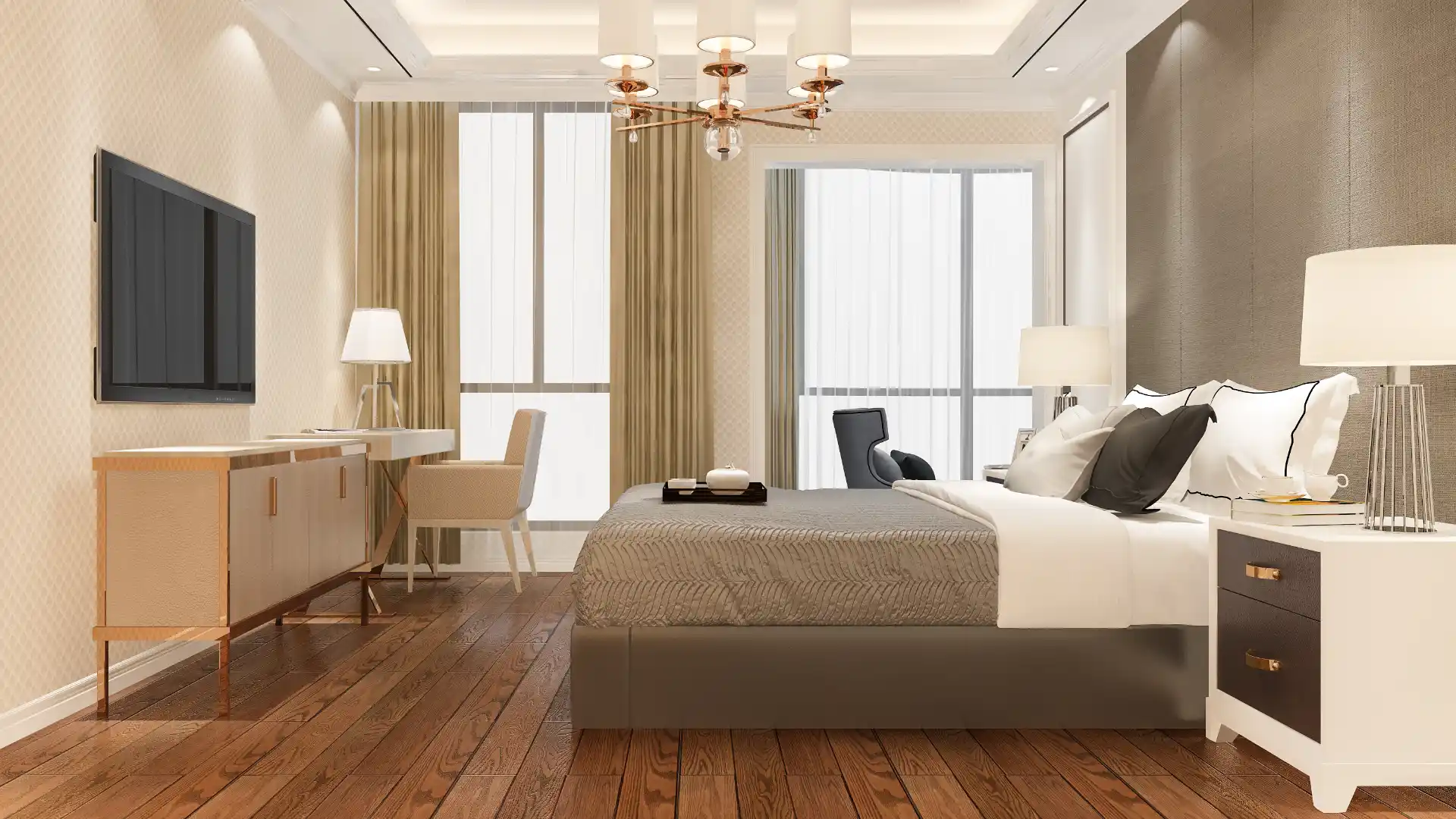
The best modern bedroom design ideas create a room that feels organized, comfortable, and visually intentional rather than simply filling the space with trendy furniture. Modern bedroom design is often associated with clean lines and minimal decoration, but a successful room also needs warmth, texture, appropriate lighting, practical storage, and furniture that fits the scale of the space.
A modern bedroom should support its primary purpose: rest. That means the layout should allow comfortable movement, lighting should be adjustable, storage should reduce visible clutter, and materials should work together rather than competing for attention.
Modern design can also take different forms. A bedroom can be warm and natural with oak and linen, dramatic with darker walls, minimalist with restrained furniture, or more luxurious through layered textures and carefully selected architectural details.
The key is to establish a consistent visual language while leaving enough room for comfort and personality.
Start With a Functional Modern Bedroom Layout
One of the most important modern bedroom design ideas is to solve the layout before choosing decorative features. The bed normally becomes the visual and functional center of the room. Position it so that the main circulation route remains clear and the surrounding furniture can be used comfortably.
Establish the Bed as the Focal Point
A modern bedroom often benefits from a strong focal wall behind the bed. The headboard, wall finish, lighting, or artwork can define this area without requiring multiple decorative features throughout the room.
Maintain Comfortable Circulation
Avoid filling the bedroom simply because space is available. Leave practical clearance around the bed, wardrobe, drawers, and entrance. A modern room should feel visually clean because it is well planned, not because essential furniture has been removed.
Consider Sight Lines
When entering the bedroom, the first view should ideally feel orderly. Large furniture pieces should be positioned so that they do not unnecessarily obstruct the entrance or create awkward visual barriers.
Choose a Low-Profile Bed
A low-profile bed is a natural fit for many modern bedrooms because its horizontal proportions reinforce the clean lines associated with the style.
Use a Platform Bed
A simple platform bed can eliminate unnecessary visual bulk. Wood, upholstered, or composite finishes can work depending on the overall material palette.
Consider a Floating Appearance
Some modern beds are designed with recessed bases that create the impression that the mattress is floating. The effect is primarily visual, but it can make the room appear lighter.
Do Not Sacrifice Comfort for Appearance
An extremely low bed is not appropriate for everyone. Consider mattress height, ease of getting in and out of bed, and the needs of the people using the room before choosing the final bed height.
Build a Cohesive Color Palette
Color is one of the easiest ways to establish a modern bedroom aesthetic.
Use Warm Neutrals
White, beige, greige, warm gray, taupe, and soft earthy tones can create a calm foundation. Warm neutrals are particularly useful when the room contains clean-lined furniture because they prevent the space from feeling overly clinical.
Try a Dark Modern Bedroom
Deep charcoal, navy, olive, brown, or other darker tones can create a more intimate atmosphere. A dark bedroom works best when balanced with appropriate lighting and contrasting textures.
Use Accent Colors Carefully
Modern rooms generally benefit from a controlled palette. Instead of using several competing accent colors, select one or two tones and repeat them through artwork, bedding, accessories, or upholstery.
Add Warmth With Natural Materials
Modern design does not have to mean cold surfaces and hard edges. Natural materials can soften the architecture.
Use Wood
Oak, walnut, ash, and other wood finishes can introduce warmth and visual texture. Repeat the same or complementary wood tones across several pieces rather than using many unrelated finishes.
Add Linen and Cotton
Bedding, curtains, and upholstery can introduce softness. Natural-looking textiles also help balance harder materials such as glass, metal, stone, or concrete.
Use Stone or Stone-Look Surfaces
A stone feature can add depth to a modern bedroom. Use it selectively so the room does not become visually heavy.
Design a Modern Feature Wall
A feature wall can give the bedroom architectural character without requiring excessive decoration.
Use Fluted or Slatted Panels
Vertical or linear wall treatments create texture while maintaining the structured appearance associated with modern interiors.
Try a Microcement-Inspired Finish
A continuous mineral-style surface can create a restrained architectural backdrop. If using an actual specialty finish, confirm that the substrate and installation system are appropriate for the application.
Use Paint Instead of Construction
A carefully chosen paint color behind the bed can achieve a similar focal effect at a much lower cost.
Choose Modern Bedroom Lighting
Lighting can completely change the atmosphere of a modern bedroom. A single ceiling fixture rarely provides enough flexibility for different activities.
Layer Ambient Lighting
General lighting provides overall illumination. Recessed fixtures, flush-mount lights, or other appropriately selected ceiling fixtures can provide the base layer.
Add Bedside Lighting
Wall sconces or pendant lights can provide focused illumination for reading while reducing the need for bulky bedside lamps.
Use Accent Lighting
LED strips or concealed lighting can highlight architectural features, wardrobes, shelves, or the underside of furniture. The lighting should enhance the room rather than become the only thing people notice.
Use Warm, Dimmable Lighting
A modern bedroom needs different lighting levels at different times.
Choose a Comfortable Color Temperature
Warm light is generally better suited to a relaxing bedroom atmosphere than harsh, cool illumination.
Install Dimmers
Dimmers allow the same fixture to provide brighter illumination when needed and softer light when the room is being prepared for sleep.
Avoid Over-Lighting
More fixtures do not automatically create a better bedroom. Use lighting to define specific functions rather than illuminating every surface equally.
Create Concealed Bedroom Storage
Modern interiors often look clean because storage is integrated rather than because the occupants own fewer belongings.
Use Floor-to-Ceiling Wardrobes
Tall wardrobes can use otherwise wasted vertical space. Handleless or minimally detailed fronts can create a continuous appearance across the wall.
Use Built-In Bedside Storage
Integrated nightstands or wall-mounted cabinets can reduce the number of separate furniture pieces.
Hide Everyday Clutter
Closed storage is particularly useful for clothing, electronics, paperwork, and miscellaneous belongings that can make a bedroom feel visually chaotic.
Use Handleless or Minimal Cabinetry
Cabinet hardware can significantly affect the appearance of a modern bedroom.
Choose Slab-Front Doors
Flat cabinet fronts create a simple visual surface.
Use Recessed or Push-Open Hardware
Minimal hardware can reduce visual interruption. However, conventional handles can still work in a modern room when their shape and finish complement the overall design.
Add Texture Without Creating Clutter
Modern bedrooms need texture to prevent a minimal palette from becoming flat.
Layer Bedding
Combine sheets, a duvet, a coverlet, cushions, and a throw using a restrained color palette. Different textures can create depth without requiring bright colors.
Add an Upholstered Headboard
An upholstered headboard can soften a room dominated by hard surfaces. Choose a simple shape rather than an excessively ornate design.
Use a Textured Rug
A rug can introduce warmth underfoot and visually connect the bed to the surrounding furniture.
Choose Modern Bedroom Flooring
Flooring should support the room’s visual language while remaining comfortable.
Use Wood Flooring
Wood creates warmth and works with both light and dark modern palettes.
Consider Large-Format Tile
In appropriate climates and applications, large-format tile can create a clean architectural appearance. A rug can soften the surface around the bed.
Consider Carpet
Carpet is not incompatible with modern design. A simple, low-profile carpet can provide acoustic and underfoot comfort while maintaining a restrained appearance.
Introduce Natural Light
Natural light can make a modern bedroom feel more spacious and connected to the surrounding environment.
Keep Window Treatments Simple
Use curtains, shades, or blinds that complement the room rather than dominating it.
Use Layered Window Treatments
Sheer and blackout layers can provide daytime light control and nighttime privacy.
Avoid Blocking Windows
Large wardrobes or shelving should not unnecessarily obstruct available daylight.
Add a Reading Corner
A reading corner can make a modern bedroom more functional without disrupting its simplicity.
Choose One Comfortable Chair
A compact upholstered chair can create a dedicated reading zone.
Add a Floor or Wall Light
Use a focused light source rather than relying solely on the bedroom’s general lighting.
Keep the Area Uncluttered
The reading corner should feel intentional rather than like a collection of leftover furniture.
Use Mirrors Strategically
Mirrors can add visual depth and reflect natural or artificial light.
Install a Full-Length Mirror
A full-length mirror near the wardrobe creates a practical dressing area.
Use Mirrored Wardrobe Doors
This approach combines storage and reflection.
Avoid Excessive Mirrors
A modern bedroom does not need reflective surfaces everywhere. One strategically placed mirror can have more impact than multiple decorative mirrors.
Create a Modern Bedroom With Black Accents
Black can provide contrast in an otherwise neutral room.
Use Black Lighting Fixtures
Matte-black sconces, pendants, or floor lamps can define the lighting scheme.
Add Small Black Details
Picture frames, cabinet hardware, furniture legs, and decorative objects can repeat the accent color. The objective is balance rather than covering the room in black.
Use Greenery to Soften the Room
Plants can introduce organic shapes and color into a structured interior.
Choose Plants According to the Room
Consider available daylight, humidity, temperature, and maintenance requirements.
Use One Large Plant
A larger plant can create a stronger focal point than many small plants scattered throughout the room.
Design a Modern Luxury Bedroom
Luxury does not require filling a bedroom with expensive materials.
Focus on Proportion
Well-proportioned furniture can look more sophisticated than expensive furniture that is too large or too small.
Use Fewer, Better Details
A high-quality headboard, well-designed lighting, carefully selected bedding, and coordinated cabinetry can create a refined appearance.
Use Layered Materials
Wood, fabric, stone, metal, and glass can work together when their colors and proportions are controlled.
Create a Warm Modern Bedroom
Warm modern design combines clean architectural lines with comfortable materials.
Combine Wood and Neutral Fabrics
Warm wood furniture with beige, cream, taupe, or muted gray textiles creates a softer modern palette.
Add Soft Lighting
Warm lamps and dimmable fixtures can prevent the room from feeling overly stark at night.
Use Curved Furniture Selectively
A rounded chair, curved lamp, or softly shaped headboard can break up an interior dominated by straight lines.
Try a Minimalist Modern Bedroom
Minimalism and modern design overlap, but they are not identical.
Keep Only Useful Furniture
Remove pieces that do not serve a clear function.
Maintain Negative Space
Empty areas are part of the composition.
Do not feel obligated to decorate every wall or fill every corner.
Hide Excess Belongings
Minimalist bedrooms depend heavily on organized storage.
A cluttered room can undermine the effect even when the furniture itself is minimalist.
Create a Modern Bedroom in a Small Space
Modern design can work particularly well in compact bedrooms because it emphasizes functionality and controlled furniture.
Choose Multi-Functional Furniture
Use beds with storage, floating nightstands, wall-mounted lighting, and compact desks where necessary.
Keep the Palette Consistent
Too many contrasting finishes can make a small bedroom feel visually fragmented.
Use Vertical Storage
Tall wardrobes and wall-mounted shelves can increase capacity without consuming as much floor area.
Add Technology Without Making the Room Look Cluttered
Modern bedrooms often contain chargers, speakers, televisions, and other devices.
Plan Charging Points
Position outlets and USB or charging solutions where devices are actually used.
Conceal Cables
Route cables through appropriate channels or built-in openings where possible.
Avoid Making Screens the Focal Point
A television can be integrated into cabinetry or positioned discreetly so that it does not dominate the room.
Improve Acoustic Comfort
A bedroom should not only look calm; it should feel calm.
Use Soft Surfaces
Rugs, curtains, upholstered furniture, and fabric wall elements can help reduce hard-surface reflections.
Avoid Excessive Hard Materials
A room dominated by tile, glass, metal, and bare walls can feel acoustically harsher. Balance them with textiles and other softer finishes.
Design for Long-Term Comfort
A modern bedroom should remain useful as needs change.
Choose Adjustable Lighting
Dimmers and multiple lighting layers provide flexibility.
Use Adaptable Storage
Adjustable shelves and movable hanging systems can accommodate changing storage requirements.
Consider Accessibility
Choose furniture heights and circulation routes according to the people who use the room. A modern aesthetic should never require uncomfortable or impractical furniture.
Compare Modern Bedroom Design Approaches
| Design approach | Key characteristics | Best for | Main consideration |
| Warm modern | Wood, neutral textiles, soft lighting | Cozy bedrooms | Requires material coordination |
| Minimalist modern | Essential furniture, open space, restrained decor | Small or uncluttered rooms | Storage must be organized |
| Modern luxury | Premium materials, layered textures, statement details | Primary bedrooms | Can become visually excessive |
| Dark modern | Deep colors, controlled lighting, rich materials | Dramatic interiors | Needs adequate lighting |
| Natural modern | Wood, plants, earthy colors | Relaxed spaces | Maintain a restrained palette |
| Modern industrial | Metal, concrete, darker tones | Loft-style rooms | Can feel cold without soft textures |
Avoid Common Modern Bedroom Design Mistakes
Even attractive modern bedroom design ideas can produce poor results when the room is designed only around appearance.
Do Not Confuse Modern With Empty
A modern bedroom does not need to contain almost nothing. Furniture should be removed because it is unnecessary, not simply to create an artificial minimalist appearance.
Do Not Use Too Many Materials
Introducing numerous woods, metals, stones, fabrics, and finishes can destroy visual cohesion. Choose a small group of materials and repeat them.
Do Not Make Everything the Same Color
A completely uniform palette can become flat. Introduce contrast through texture, subtle color changes, and natural materials.
Do Not Rely on One Light Fixture
Layered lighting provides considerably more control over atmosphere and function.
Do Not Choose Furniture Without Measuring
A modern bedroom still needs comfortable circulation. Oversized furniture can undermine even the best design concept.
Do Not Ignore Storage
Visible clutter is particularly noticeable in minimalist interiors. Plan storage as part of the architecture rather than treating it as an afterthought.
Plan Your Modern Bedroom Step by Step
The most effective modern bedroom design ideas become easier to execute when the project is planned in the correct order.
Measure the Room
Record dimensions, doors, windows, ceiling height, outlets, and fixed features.
Establish the Layout
Place the bed and largest storage pieces first.
Select the Material Palette
Choose the primary wood, wall finish, flooring, metal accents, and textiles.
Plan Lighting
Decide where ambient, task, and accent lighting will be installed.
Integrate Storage
Determine what should be hidden and what can remain visible.
Select Furniture
Choose pieces that match the room’s dimensions and material palette.
Add Textiles
Introduce bedding, curtains, rugs, and upholstery to provide comfort and texture.
Add Decorative Details Last
Artwork, plants, books, and accessories should complete the room rather than determine its design.
Frequently Asked Questions
What are the best modern bedroom design ideas?
Popular approaches include low-profile beds, clean-lined furniture, concealed storage, layered lighting, natural materials, neutral colors, textured feature walls, simple window treatments, and carefully selected artwork.
What colors work best in a modern bedroom?
Warm neutrals, soft whites, gray, beige, taupe, charcoal, navy, muted green, and earthy colors can all work. The best choice depends on natural light, room size, furniture, and the desired atmosphere.
How can I make a modern bedroom feel cozy?
Use warm wood, layered bedding, rugs, curtains, upholstered furniture, natural textures, plants, and warm dimmable lighting. Modern design does not need to rely exclusively on hard surfaces.
What type of bed is best for a modern bedroom?
A simple platform or low-profile bed is a common choice. However, the ideal height should also account for comfort, mattress thickness, accessibility, and the needs of the occupants.
How do I make a small bedroom look modern?
Use appropriately scaled furniture, concealed storage, clean lines, a consistent color palette, wall-mounted lighting, and vertical storage. Avoid filling the limited floor area with unnecessary furniture.
Is dark paint suitable for a modern bedroom?
Yes. Dark colors can create a sophisticated and intimate atmosphere. They work particularly well when balanced with suitable lighting, contrasting textiles, and lighter or natural materials.
What lighting is best for a modern bedroom?
Layered lighting is generally more effective than a single fixture. Combine ambient lighting with bedside task lighting and optional accent illumination, preferably with dimming capability.
Should modern bedrooms have a feature wall?
They do not need one, but a carefully designed feature wall can create a focal point. Paint, wood slats, fluted panels, textured finishes, or a restrained wallpaper can all work.
How do I make a modern bedroom look expensive?
Focus on proportion, material consistency, lighting, quality-looking textiles, concealed storage, and a limited number of carefully selected details. A cohesive design often looks more sophisticated than a room filled with expensive individual items.
What materials work well in modern bedrooms?
Wood, stone, glass, metal, plaster-like finishes, linen, cotton, wool, and upholstery can all work. The important factor is how the materials relate to one another.
How can I keep a modern bedroom from looking cold?
Introduce warm wood, soft fabrics, rugs, natural materials, plants, warm lighting, and comfortable upholstery. Avoid relying exclusively on white, gray, glass, metal, and hard surfaces.
Is modern bedroom design suitable for a master bedroom?
Yes. Modern design can work particularly well in primary bedrooms because it combines a clean visual structure with opportunities for integrated storage, layered lighting, comfortable furniture, and personalized materials.
Conclusion
The strongest modern bedroom design ideas combine clean architectural lines with genuine comfort. A modern bedroom should not simply look minimal; it should make everyday life easier through thoughtful furniture placement, practical storage, flexible lighting, appropriate materials, and a controlled visual palette.
Start with the layout and establish the bed as the primary focal point. Then build around it with concealed storage, proportionate furniture, layered lighting, and a limited selection of complementary materials. Natural wood, soft textiles, warm lighting, and greenery can prevent the room from feeling cold while preserving its modern character.
Avoid the temptation to follow every trend at once. Modern design becomes more convincing when the room has a clear visual language and each element has a reason to be there.
Ultimately, a successful modern bedroom should feel calm rather than empty, refined rather than excessive, and functional rather than purely decorative.