Garden Advice Homenumental: A Practical Guide to a Healthier, Lower-Maintenance Yard
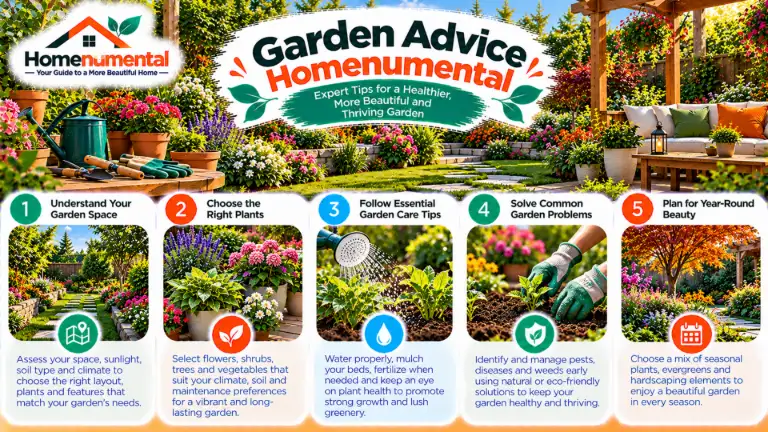
If you have searched for garden advice homenumental, you have probably found several home blogs sharing tips on soil, watering, plant choice, and backyard design. The tips are good starting points. What most of those pages leave out is the reason behind each tip, and the U.S. resources that tell you what will work in your own yard. This guide takes the main ideas behind garden advice homenumental and checks them against guidance from the USDA, the EPA’s WaterSense program, Cooperative Extension services, and the Royal Horticultural Society (RHS). It gives practical steps and real numbers where they exist. It also notes where your local conditions should override general advice.
What Is Garden Advice Homenumental?
“Homenumental” is a name shared by several home and lifestyle blogs on .com, .us, .net, and other domains. They publish guides on home improvement, decorating, and gardening. Their garden articles cover the same core themes: understand your space, build healthy soil, choose suitable plants, water carefully, and turn the yard into a place you enjoy.
That means garden advice homenumental is not one specific method. It is a practical, beginner-friendly way of thinking that treats the garden as an extension of the home and balances good looks with manageable upkeep. The approach is sound, but it is often short on detail. Advice like “water properly” or “pick the right plants” only helps once you know how much water, which plants, and how to tell the difference. The sections below fill in those gaps.
The Core Principles at a Glance
The table below shows how the main ideas behind garden advice homenumental line up with trusted U.S. resources.
| Principle | What It Means in Practice | Where to Get Reliable Local Information |
| Know your site | Sun, shade, drainage, wind, and hardiness zone | USDA Plant Hardiness Zone Map |
| Build healthy soil | Test first, then add organic matter | Your local Cooperative Extension office |
| Right plant, right place | Match plants to zone, light, and soil | EPA WaterSense “What to Plant” page |
| Water wisely | Deep, infrequent watering at the right time | EPA WaterSense watering tips |
| Mulch and maintain | Protect soil, limit weeds, prune with purpose | EPA, Extension, and RHS guides |
| Enjoy the space | Seating, paths, lighting, and focal points | Your own style, space, and budget |
Step 1: Get to Know Your Garden Before Buying Plants
The most common beginner mistake is buying plants first and finding a spot for them later. Every reliable source, from garden advice homenumental pages to the RHS, starts in the same place: watching your yard closely.
Track Sun and Shade
Check your garden in the morning, at midday, and in the late afternoon. Note which areas get full sun, part sun, or steady shade. Plant labels describe light needs in these terms, and the more sun a bed receives, the more plants you can choose from. Light also shifts through the year. A tree that leafs out in late spring can turn a sunny April bed into a shady one by June.
Check Drainage and Soil Texture
After a heavy rain, look for puddles that stay for hours. Standing water points to poor drainage or compacted soil, which many plants will not tolerate. Squeeze a handful of moist soil. Sandy soil feels gritty and falls apart, while clay feels sticky and holds its shape. According to the RHS, sandy soils drain quickly, and clay soils are heavy and can take several years of added organic matter to improve.
Notice Microclimates
Conditions vary even inside a small yard. A bed next to a sunny wall or a paved patio can run much hotter than one under a tree. Windy corners dry out faster, and soil under roof eaves can stay dry even after rain. These small pockets, called microclimates, explain why the same plant can thrive in one corner and struggle in another.
Find Your USDA Plant Hardiness Zone
This is the most useful single step for American gardeners, and it is missing from most garden advice homenumental articles.The USDA Plant Hardiness Zone Map is the standard tool for working out which perennial plants are most likely to survive where you live. It is based on the average annual extreme minimum winter temperature and is split into 10°F zones and 5°F half zones (for example, 6a and 6b). You can find your zone by entering your ZIP code on the official map at planthardiness.ars.usda.gov. A few facts about the current 2023 map are worth knowing:
- It is built on temperature data from 1991 to 2020, collected from 13,625 weather stations.
- Across much of the country, zones run about a quarter-zone warmer than on the 2012 map, though some areas shifted cooler because of better data.
- Zones 12 and 13 appear only in Hawaii and Puerto Rico.
- Cities, mountaintops, and areas near large bodies of water can sit in a different zone from the countryside around them.
Keep one limit in mind. Hardiness zones reflect winter cold only. They do not account for summer heat, humidity, or rainfall, so a plant rated for your zone can still struggle in a hot, dry summer. Use your zone as the first filter, then check light, soil, and water needs.
Step 2: Build Healthy Soil From the Ground Up
Soil care shows up in nearly every piece of good garden advice homenumental content, and for good reason. The EPA notes that healthy soils recycle nutrients, hold water, reduce runoff, and absorb excess nutrients and pollutants.
Test Before You Amend
Guessing at fertilizer often causes more problems than it solves. A soil test shows your pH, nutrient levels, soil composition, and organic matter content. The EPA recommends contacting your local Cooperative Extension office or state university for a test kit or testing service. Results from these labs usually come with recommendations tailored to what you plan to grow, which is far more useful than generic product advice.
Add Organic Matter
Compost improves both water-holding capacity and drainage. That sounds contradictory, but it works both ways: it helps sandy soil hold moisture and helps heavy clay loosen up. Mix it into new beds before planting and spread a layer on established beds each year.
Loosen Compacted Ground
Construction and foot traffic pack soil down, which slows water absorption and increases runoff. The EPA suggests aerating compacted areas so water reaches roots more easily. In beds, avoid stepping on the soil, especially when it is wet.
Go Easy on Fertilizer
Both the EPA and the RHS warn against heavy feeding. Fertilizer pushes soft new growth that needs extra water and dries out faster. If your soil test shows a real need, the EPA suggests a slow-release or natural organic product. On lawns, leaving grass clippings in place returns nutrients to the soil and reduces how much fertilizer you need.
Step 3: Choose the Right Plants for the Right Place
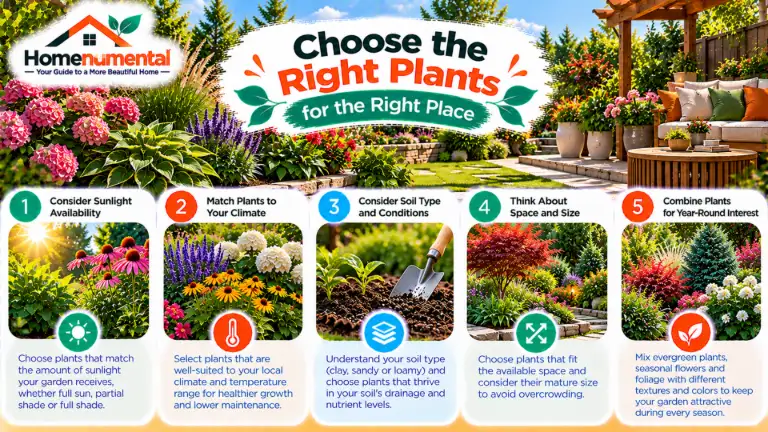
Most garden advice homenumental articles say to choose plants that suit your space, not just plants that look good at the store. Here is how to put that into practice.
Start With Native and Regionally Suited Plants
According to the EPA, native plants are adapted to local soils and climate. Once established, they need little water beyond normal rainfall, rarely need fertilizer, and resist pests and diseases better than many other species. They also feed and shelter local pollinators and birds. Be careful with exotic species. Some are invasive, use more water, and can crowd out native plants. The EPA’s WaterSense “What to Plant” page lists resources by state, and your Extension office can tell you which plants are invasive locally.
Mix Plant Types for Year-Round Interest
A balanced garden combines several plant groups:
- Trees for shade, structure, and wildlife habitat
- Shrubs for borders, privacy, and winter shape
- Perennials that return each year and fill beds over time
- Annuals for quick, season-long color in gaps and containers
- Groundcovers to protect bare soil and cut down on weeding
Look beyond flowers too. Colorful bark, berries, seed heads, and evergreen foliage keep a garden interesting after the blooms fade.
Plan for Mature Size
A small nursery shrub can be several feet wide within a few years. Always check the mature height and spread on the label and space plants to match. Crowded plants compete for light, water, and airflow, which raises the risk of disease.
Plant Small and at the Right Time
The RHS notes that younger, smaller plants usually establish faster than large ones. Before planting, soak the pot in a bucket of water until air bubbles stop rising so the root ball starts fully hydrated. In most of the U.S., spring and early fall are the main planting windows for perennials, trees, and shrubs. Mild temperatures let roots grow without heat stress. Your Extension office can give planting dates for your region.
Step 4: Water Smarter, Not More
Watering is where many gardeners go wrong. It is also where general garden advice homenumental tips benefit most from specific numbers.
How Much Water Does a Garden Need?
The EPA says a typical landscape needs about one inch of water per week, including rainfall. The real amount depends on your climate, recent weather, and the plants you grow, so treat this as a starting point. The RHS adds an important caution. Avoid fixed routines like “water once a week” without checking the soil, because needs change with weather, soil type, plant size, and how established a plant is.
Water Deeply and Less Often
Light daily sprinkling keeps roots near the surface, where they dry out quickly. Deep, occasional watering pushes roots downward and makes plants tougher during dry spells. Here are target depths based on RHS guidance:
| Plant Type | How Deep to Moisten the Soil | Notes |
| New perennials | About 6 inches | Mainly needed in the first year |
| New trees and shrubs | About 8 to 12 inches | Water during dry spells in year one; large trees may need help for up to three summers |
| Established beds and borders | About 6 inches | Usually only during drought |
| Containers | Water when the top inch is dry | Check daily in warm months |
| Seeds and seedlings | Keep the surface moist | Use a gentle spray |
Try the Tuna Can Test
The EPA suggests a simple way to measure sprinkler output. Place a few empty tuna cans around the lawn, run the sprinkler, and time how long it takes to fill them with half an inch of water. Watering for that long twice a week, then adjusting for the weather, gives you a practical baseline.
Water at the Right Time of Day
Early morning is the best time. Less water evaporates, and plants have moisture available through the hottest part of the day. Evening watering is acceptable, but it leaves leaves damp overnight, which can encourage fungal disease. Avoid midday watering, since much of the water evaporates before it reaches the roots. Direct water at the soil around the base of each plant rather than over the foliage.
Choose an Efficient Watering Method
- Watering can: the most control and least waste for small areas
- Soaker hose or drip irrigation: delivers water slowly to roots, ideal for beds and vegetable gardens
- Sprinklers: convenient for lawns but one of the least efficient methods; aim them away from sidewalks and driveways
- Smart controllers: WaterSense labeled weather-based or soil moisture-based controllers adjust schedules automatically, so you do not water right after a storm
Group Plants by Water Needs
The EPA calls these groups “hydrozones.” Placing thirsty plants together and drought-tolerant plants together lets you water each area according to what it needs. Lawns and shrub beds, for example, should always be watered separately.
Be Careful on Clay Soil and Slopes
Water can run off clay soil or sloped ground before it soaks in. The EPA’s “cycle and soak” method splits watering into short sessions with breaks between them, so the soil has time to absorb each round. On slopes, the EPA also recommends deep-rooted plants such as native groundcovers and shrubs to hold the soil and limit erosion.
Collect Rainwater, but Check State Rules
Rain barrels and cisterns can supply free water for your plants. However, the EPA notes that some states have laws that restrict rainwater collection, so check with your state water resource agency before installing a system. Another option is directing downspouts toward a rain garden that soaks up runoff.
Step 5: Mulch, Weed, and Prune With Purpose
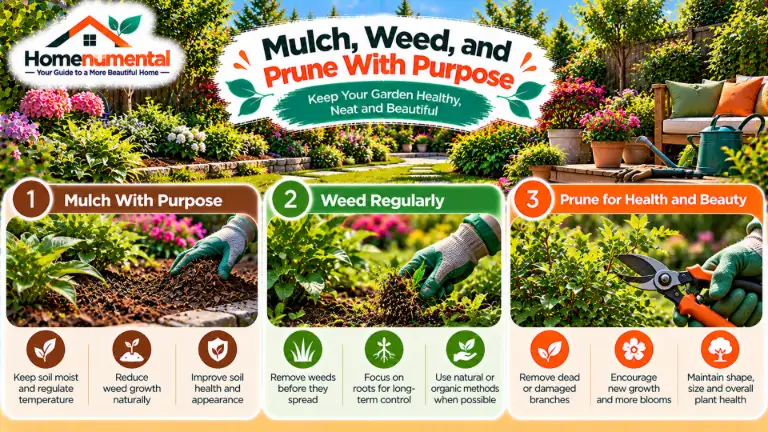
These three jobs appear in almost every garden advice homenumental checklist. Done well, they are what makes a garden feel low maintenance.
Mulch the Right Way
Mulch slows evaporation, suppresses weeds, prevents erosion, and keeps soil temperatures steadier. The EPA recommends:
- A layer 3 to 4 inches deep for most plants, since too much can block water from reaching roots
- Leaving a few inches of space between organic mulch and the base of trees and woody plants to prevent rot
- Pulling weeds before mulching and spreading it evenly to avoid thin spots
Organic mulches such as hardwood chips, straw, leaves, and pine needles add nutrients as they break down. Rock and gravel last longer but radiate heat, so the EPA advises against using them in sunny spots around plants that are not adapted to dry climates.
| Mulch Type | Best Use | What to Watch For |
| Shredded hardwood or bark | Shrub and perennial beds | Top up as it breaks down |
| Straw | Vegetable gardens | Choose weed-free straw, not hay |
| Shredded leaves | Free, everyday bed mulch | Shred first so they do not mat |
| Pine needles | Beds, paths, and slopes | Light and stays in place well |
| Gravel or rock | Dry gardens and drought-adapted plants | Holds heat and is hard to remove later |
Stay Ahead of Weeds
Weeds compete with your plants for water, nutrients, and light. Short, regular sessions work far better than one big cleanup. Pull weeds while they are young and the soil is moist, ideally before they set seed. If you cannot identify a seedling, wait until you can. Some volunteers turn out to be welcome plants.
Prune With a Clear Reason
Prune to remove dead, damaged, or diseased wood, to improve airflow, or to control shape. Timing matters. Many spring-flowering shrubs bloom on the previous year’s growth, so cutting them back in fall or winter removes next spring’s flowers. Look up the specific plant before cutting, keep tools clean and sharp, and hire a certified arborist for large trees or branches near power lines.
Step 6: Handle Pests and Plant Problems With a Light Touch
Pest control is one area where many garden advice homenumental pages stay vague. Even healthy gardens get pests, so the goal is to catch problems early and use the least disruptive fix that works.
- Inspect regularly. Check the undersides of leaves, stems, and new growth during a weekly walk through the garden.
- Identify the cause first. Yellow or spotted leaves can come from pests, disease, overwatering, or nutrient problems. Many Extension offices offer plant problem diagnosis.
- Start with simple fixes. Hand-pick larger insects, prune affected growth, or rinse small pests off with water.
- Invite natural predators. A wide mix of plants attracts ladybugs, lacewings, birds, and other helpful wildlife.
- Use products only when needed. If you choose a pesticide, follow the label directions exactly and never use more than recommended.
Well-placed, healthy plants handle problems better than stressed ones, which is why the earlier steps matter so much.
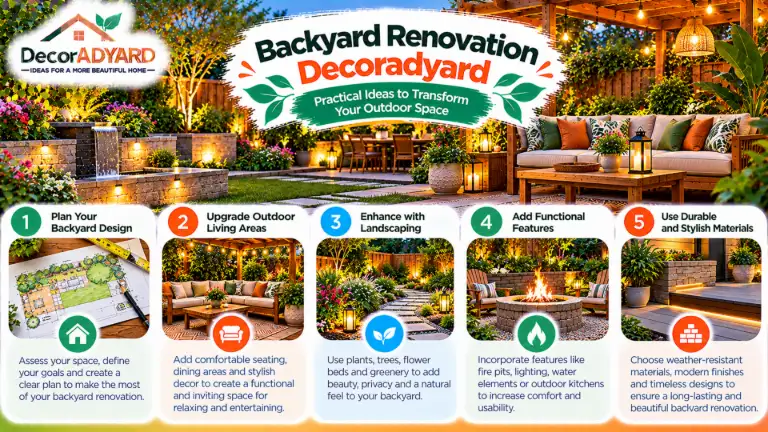
Step 7: Design a Garden You Will Actually Use
The design side of garden advice homenumental treats the yard as another room of the house. That mindset is especially helpful when space is limited.
Layer Your Plantings
Place taller plants at the back of borders (or the center of island beds), medium plants in the middle, and low growers at the front. This adds depth and keeps every plant visible.
Add One or Two Focal Points
A birdbath, a large planter, a small water feature, a bench, or a standout tree gives the eye a place to rest. One or two strong features work better than many small ornaments scattered around.
Create Paths and Places to Sit
Stepping stones, gravel, or mulch paths guide people through the garden and keep feet off planting beds. Permeable materials also let rain soak in rather than run off. A simple chair or bench can turn an unused corner into a spot you visit every day.
If you want more ideas for the look and layout of outdoor spaces, our guide to garden homenumental covers backyard styling in more depth.
Light It for the Evening
Low path lights and soft uplighting on trees extend the hours you can enjoy your garden. Solar fixtures are an easy starting point because they need no wiring.
Make a Small Space Feel Larger
- Grow upward with trellises, wall planters, and climbing plants
- Use containers of different heights to add depth without taking up ground space
- Stick to a limited color palette for a calmer, roomier look
- Keep paths clear and avoid oversized furniture
Connect Indoors and Outdoors
Think about the view from your windows and back door. Placing attractive plants where you can see them from inside, and repeating colors or materials from your interior, makes the garden feel like part of the house. For ideas on coordinating your indoor style with your outdoor space, see our decoration guide homenumental article.
Growing Herbs and Vegetables as a Beginner
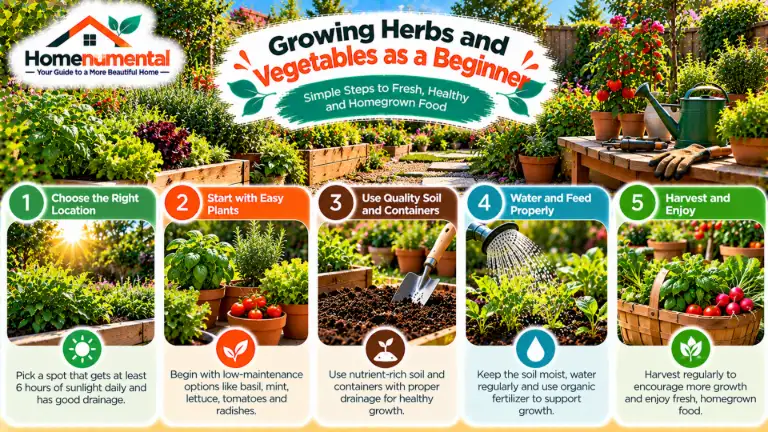
Growing food is a natural part of garden advice homenumental, and starting small is the surest way to succeed.
- Pick the sunniest spot. Most vegetables and many herbs need full sun, generally six to eight hours of direct light a day.
- Start with forgiving crops. Basil, parsley, chives, lettuce, bush beans, radishes, and cherry tomatoes are reliable first choices.
- Consider raised beds or containers. They warm faster in spring, drain well, and give you control over the soil.
- Water to suit the crop. The RHS notes that leafy crops like lettuce and spinach need evenly moist soil, while root crops such as carrots and beets need less frequent watering.
- Learn your frost dates. Tender crops like tomatoes and peppers should go out only after your last spring frost. Your Extension office can give local averages.
A Seasonal Garden Care Calendar
Seasonal timing ties all garden advice homenumental tips together. Dates vary widely across the country, so adjust this calendar to your zone and local frost dates.
| Season | Key Tasks |
| Early spring | Test soil, clear beds, prune summer-flowering shrubs, plan new plantings, start seeds indoors |
| Late spring | Plant perennials, shrubs, and warm-season crops after the last frost; mulch beds |
| Summer | Water deeply in the morning, weed regularly, deadhead flowers, check for pests, harvest |
| Fall | Plant trees, shrubs, and spring bulbs; add compost; leave some seed heads for birds; shred leaves for mulch |
| Winter | Plan next year, clean and sharpen tools, order seeds, protect tender container plants |
Common Mistakes to Avoid
Most problems beginners face when following garden advice homenumental come from a handful of habits:
- Buying plants before checking sun, soil, and hardiness zone
- Watering a little every day instead of deeply and less often
- Piling mulch against tree trunks and plant stems
- Fertilizing without a soil test
- Spacing plants by nursery-pot size instead of mature size
- Pruning spring-flowering shrubs at the wrong time
- Letting sprinklers soak driveways and sidewalks
- Starting too many projects at once
How Popular Tips Compare With Official Guidance
Here is how common garden advice homenumental tips compare with what official U.S. and horticultural sources add.
| Common Tip | What Official Sources Add |
| “Test your soil” | Use your Cooperative Extension office for affordable, region-specific testing (EPA) |
| “Choose suitable plants” | Start with your USDA hardiness zone, then favor native and regionally suited species (USDA, EPA) |
| “Water in the morning” | Correct; aim for about 1 inch per week including rain, adjusted for conditions (EPA, RHS) |
| “Use mulch” | Apply 3 to 4 inches and keep it a few inches away from trunks (EPA) |
| “Use drip irrigation and rainwater” | Effective, but check your state’s rules on rainwater collection (EPA) |
| “Keep the garden low maintenance” | Hydrozones, native plants, and less fertilizer reduce both work and water use (EPA) |
You can find more practical home and garden guides on HomeRecommends.
Conclusion
The most useful garden advice homenumental offers comes down to a few habits: learn your site, feed the soil, choose plants that fit your conditions, water deeply and at the right time, and keep up with small maintenance tasks. None of these steps needs expensive tools or professional help.
What turns general garden advice homenumental tips into reliable results is local information. Your USDA hardiness zone, a soil test from your Extension office, and EPA WaterSense watering guidance answer the questions that blog posts cannot answer for your specific yard. Start with one bed or a few containers, keep notes on what works, and expand as your confidence grows. A garden that fits your conditions and your schedule will look better and ask less of you each year.
Frequently Asked Questions
Is garden advice homenumental suitable for beginners?
Yes. Garden advice homenumental is written in plain language and focuses on basics like soil, watering, and plant choice. For the best results, pair it with local resources such as the USDA hardiness zone map and your Cooperative Extension office.
What is the best time of day to water a garden?
Early morning is best because less water evaporates and plants have moisture for the heat of the day. Evening is acceptable but can leave foliage wet overnight. Avoid watering at midday.
How do I find my USDA plant hardiness zone?
Go to the official USDA Plant Hardiness Zone Map at planthardiness.ars.usda.gov and enter your ZIP code. The current map was released in 2023 and uses temperature data from 1991 to 2020.
How thick should garden mulch be?
The EPA recommends 3 to 4 inches for most plants. Keep organic mulch a few inches away from the base of trees and woody plants to prevent rot.
Do I need to fertilize my garden every year?
Not necessarily. Test your soil first and fertilize only if the results show a need. The EPA suggests slow-release or natural organic products, and native plants rarely need fertilizer at all.
What is the easiest way to make a garden low maintenance?
Combine the main ideas from garden advice homenumental with water-smart planning: choose native or regionally suited plants, group them by water needs, mulch beds, and use drip irrigation or a smart controller. These steps cut down on watering, weeding, and feeding.
Where can I get reliable local gardening help in the U.S.?
Your local Cooperative Extension office, usually run through a state land-grant university, offers soil testing, plant problem diagnosis, and region-specific planting advice. Many also run Extension Master Gardener programs that answer questions from home gardeners.